
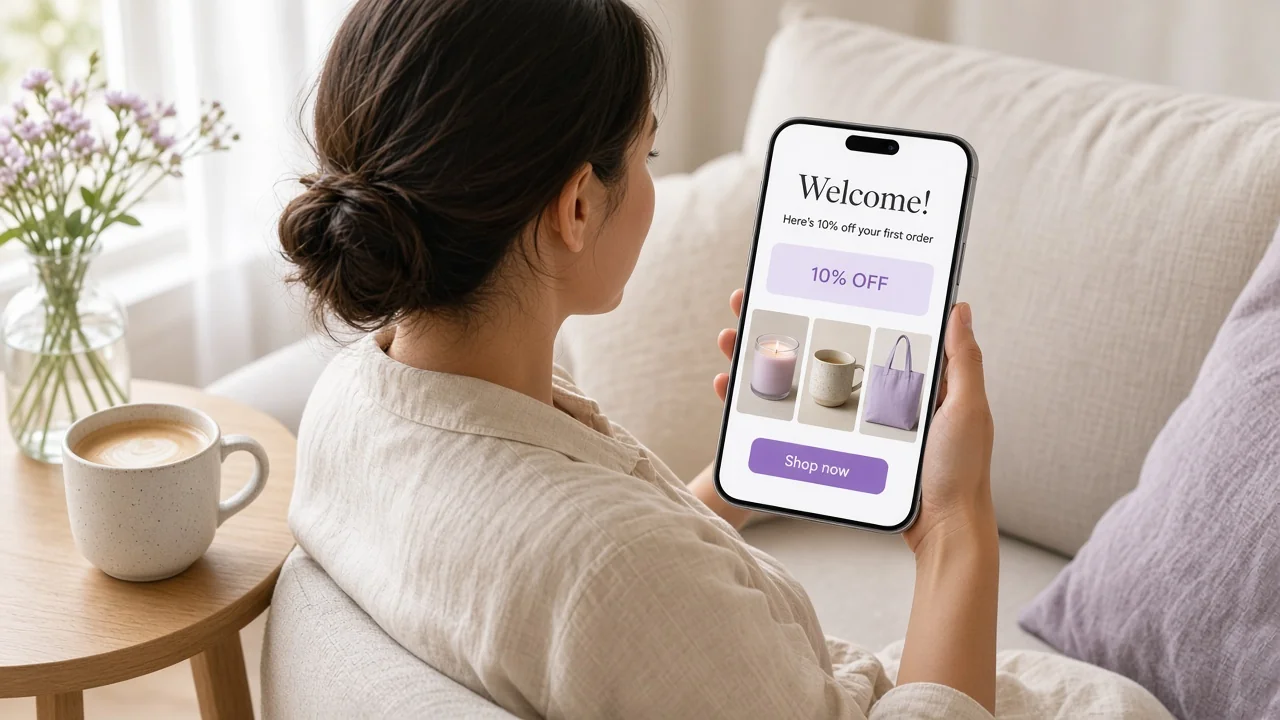
A Shopify welcome series is the first automated conversation after someone joins your list. Get the timing, promise and next step right and every later flow — cart, winback, review request — starts from a warmer contact. This guide covers email welcome series best practices for Shopify stores, with a practical 3–5 email schedule you can run in Emailwish. It sits under our Shopify email automation pillar, next to the abandoned cart flow and the best email automation tools for your Shopify store.
Why the welcome series matters
New subscribers are the most curious they will ever be. A welcome series sets expectations, delivers any promised incentive, and shows bestsellers before the contact goes cold. Stores that skip it usually bury the first offer inside a noisy campaign calendar instead.
How many emails should a welcome series have?
Three emails cover most catalogs. Five works when you have a strong brand story, a quiz result, or a multi-step onboarding offer. Stop the series when the shopper places an order so you do not keep pitching after the sale.
Timing that actually converts
Use this schedule as a default, then tighten delays if your average purchase cycle is short:
| Send | Goal | Subject example | |
|---|---|---|---|
| 1 | Immediate | Deliver promise + set expectations | You’re in — here’s your next step |
| 2 | Day 1–2 | Social proof + bestsellers | What shoppers buy first |
| 3 | Day 3–4 | Soft offer or education | A tip (and a gentle offer) before you go |
| 4–5 (optional) | Day 5–7 | Story / UGC / last nudge | One more thing from us |
What to include in each email
Email 1 — Deliver the promise
Say thanks, deliver the code or lead magnet, and tell them what emails they will get next. Link to your bestsellers collection.
Email 2 — Proof
Show reviews, UGC or a simple “most loved” product block. If you collect reviews in Emailwish, reuse them here.
Email 3 — Soft push
Education or a time-bound offer. Exit the series if they purchase. Pair later with your winback flow only after inactivity.
Welcome series best practices
- Send email 1 immediately after signup.
- Deliver any promised incentive in email 1 — never bury it.
- Set expectations for frequency and topics.
- Ask for preferences only after the first value email.
- Use social proof before a hard sell.
- Keep one clear CTA per email.
- Stop the series on purchase.
- Test subject lines on email 1 and 2 first.
- Match the popup promise to the first line of the email.
- Link the signup source popup from Emailwish popups straight into this flow.
Discount or no discount?
If the popup promised 10% off, honour it. If not, lead with brand and bestsellers first. Discounts are a lever, not a requirement for a strong welcome series.
Metrics to track
- Open rate (directional only after privacy changes)
- Click rate and click-to-open
- Placed order rate and revenue per recipient
- Unsubscribe and spam complaint rate
Automate it in Emailwish
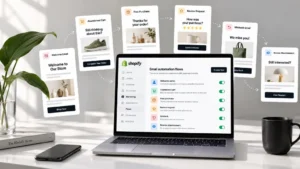
Emailwish can turn on a welcome series during onboarding with your brand voice and product blocks already filled. Browse the templates in the email flow resource, install from the Shopify App Store, and connect your signup popup so every new subscriber enters the series automatically. About 10 flows go live at setup, including welcome.
FAQ
1. How many emails should be in a welcome series?
Three to five emails works for most Shopify stores. Start with three (thanks + brand, social proof, soft offer) and add more only if engagement stays healthy.
2. When should the first welcome email be sent?
Immediately after signup — within a minute if you promised a code or download. Delay only when the signup source needs a double opt-in confirmation first.
3. Should a welcome email include a discount?
Only if the popup or lead magnet promised one. Otherwise lead with brand story and bestsellers; you can test a soft offer in email three.
4. What is a good welcome email open rate?
Welcome emails often open higher than campaigns (many brands see 40%+). Track click rate and placed-order rate per recipient, not opens alone.
How to Optimize Your Shopify Welcome Series: Conclusion
Start with three emails, send the first one immediately, honour any promised incentive, and stop the series on purchase. Then layer cart and winback. Try Emailwish free to turn the welcome series on with your brand.
Disclosure: Emailwish is our product.
We keep our content up to dateSee latest updates
- – Expanded thin welcome series guide to best-practices standard with schedule, FAQ and Emailwish setup.
- – Published


Written and fact-checked under our editorial policy. About Emailwish.