
The Shopify App Store lists thousands of apps, and most stores end up with too many of them. Each one adds a monthly bill, a script on your storefront and another dashboard to check. The real question isn’t “which apps are popular?” It’s “which jobs does my store need covered, and what’s the smallest set of apps that covers them well?”
This guide picks the best apps for your Shopify store by job: email and automation, reviews, popups, live chat and support, wishlists, back-office automation, Google and YouTube sales, dropshipping and print on demand. Every pick is an app you install from the Shopify App Store, with its price and rating checked on its listing in October 2026. We also look at something most “best Shopify apps” lists skip: whether the data an app collects, such as a chat, a review, a popup answer or a wishlist add, can actually reach your marketing. If you’re looking for software that lives outside the App Store, such as design or analytics tools, our guide to the best Shopify tools for your business covers those instead.
The 13 best Shopify apps at a glance
- Emailwish: best for email, reviews, popups, chat and wishlists in one app
- Klaviyo: best for email and SMS run by an agency or in-house marketer
- Judge.me: best free product reviews app
- Loox: best for photo and video reviews
- OptiMonk: best for advanced popup targeting and A/B tests
- Tidio: best for live chat with an AI agent
- Shopify Inbox: best free chat built by Shopify
- Gorgias: best helpdesk for high support volume
- Swym Wishlist Plus: best standalone wishlist app
- Shopify Flow: best free back-office automation
- Google & YouTube: best free app for Google Shopping and YouTube
- DSers: best for AliExpress dropshipping
- Printful: best for print on demand
Best Shopify apps compared
| App | Job | Best for | Free plan | Paid plans from | SMS | Targeting beyond email and orders | Shopify App Store rating |
|---|---|---|---|---|---|---|---|
 Emailwish Emailwish | Email, reviews, popups, chat, wishlist | Email, reviews, popups, chat and wishlists in one app | Yes100 contacts, 1,000 emails/mo | $35/mo(5,000 contacts, 10,000 emails) | No | Yeschat, review, popup and wishlist behaviour, natively | (7) |
 Klaviyo Klaviyo | Email and SMS | Agency-run or marketer-led email | Yes250 email contacts | $20/moemail (251–500 contacts); SMS from $15/mo | Yes | Forms; other behaviour via integrations | (3,345) |
 Judge.me Judge.me | Reviews | Unlimited reviews on a free plan | Yesunlimited reviews | $15/mo(Awesome) | No | Review data, sent to email tools via integrations | (47,902) |
 Loox Loox | Reviews | Photo and video reviews | Yesup to 500 orders | $49.99/mo(300 orders included) | No | Review data, via integrations on paid plans | (9,742) |
 OptiMonk OptiMonk | Popups | Advanced targeting and A/B tests | Yes10,000 pageviews/mo | $29/mo(20,000 pageviews) | No | Popup answers, synced to your email tool | (458) |
 Tidio Tidio | Live chat | Chat with an AI agent | Yes50 chat users | $29/mo(100 conversations) | No | Chat data stays in Tidio unless integrated | (1,349) |
 Shopify Inbox Shopify Inbox | Live chat | Free chat inside Shopify | YesFree app | Free | No | No | (5,790) |
 Gorgias Gorgias | Helpdesk | High ticket volume | No7-day trial | $10/mo(50 tickets) | No | Ticket data, via integrations | (706) |
 Swym Wishlist Plus Swym Wishlist Plus | Wishlist | Wishlists for large catalogues | No30-day trial | $29.99/mo(3,000 wishlist actions) | No | Wishlist data, sent to Klaviyo or Omnisend on Pro | (1,481) |
 Shopify Flow Shopify Flow | Back office | Free task automation | YesFree app | Free | No | — | (14,433) |
 Google & YouTube Google & YouTube | Ads and listings | Google Shopping and YouTube | YesFree app | Ad spend billed by Google | No | — | (5,521) |
 DSers DSers | Dropshipping | AliExpress order automation | YesBasic | $19.90/mo(Advanced) | No | — | (6,313) |
 Printful Printful | Print on demand | Custom products with no stock | YesFree app, pay per order | $24.99/mo(Growth) | No | — | (3,903) |
Prices are the starting monthly prices on each app’s Shopify App Store listing or pricing page, checked in October 2026. Most scale with contacts, orders, pageviews, conversations or tickets, so your real cost depends on volume. A dash means the column doesn’t apply to that kind of app.
What to look for in a Shopify app
A Shopify app runs inside your store, so picking the best Shopify apps involves different questions from choosing standalone software.
- Does it install cleanly? Apps that use theme app extensions add their widgets as blocks you place in the theme editor, so you never have to edit Liquid code by hand. That makes widgets easier to move around, and you’re less likely to be left with stray code in your theme after uninstalling.
- What does it do to page speed? Every storefront app loads its own scripts. Five widget apps from five vendors means five sets of scripts on your product pages. Check your theme’s speed report before and after installing anything that shows on the storefront.
- How is it priced as you grow? App prices scale on very different units: contacts, emails, orders, pageviews, conversations, tickets or wishlist actions. A $15 app can become a $150 app after one good sales month. Look at the price at two or three times your current volume, not just today’s.
- Where does its data go? This is the one most merchants miss. A review app knows who left a 2-star review. A chat app knows who asked about sizing. A wishlist app knows who saved a product that’s now on sale. If none of that reaches your email tool, you’re paying to collect data you can’t act on.
- Is it “Built for Shopify”? Shopify awards the Built for Shopify status to apps that meet its standards for performance, design and integration. It’s a useful quality signal, though plenty of good apps don’t have it yet.
How we chose the best Shopify apps
We scored every app against the same criteria, weighted in this order. The full process is in our editorial policy.
- Setup time. How long from clicking Install to the app doing its job? A popup that takes an afternoon to design or flows that take a week to build are real costs for a small team.
- Built-in features versus extra apps. Does the app cover one job or several? Every extra app is another subscription, another setup and another place where customer data falls out of sync. Native features also allow deeper targeting, because chat, review, popup and wishlist activity lands on the same customer profile.
- Shopify data connection. Does it read orders, products, inventory and customer data from Shopify in real time?
- Real price as you grow. What it costs at today’s volume and at two to three times that, and what the free plan genuinely includes.
- Results you can see. Can you tell how much revenue, how many reviews or how many signups the app produced?
- Deliverability (email apps only). Do emails reach the inbox? We’re running an identical GMass inbox-placement test on the email apps here and will publish the results soon.
- Storefront impact. Theme app extensions, mobile-friendly widgets and a sensible script footprint.
- Support. Live chat or email support, and on which plans.
- Compliance. Consent handling, GDPR tools and double opt-in where the app collects contacts.
- Shopify App Store rating (lower weight). A useful signal, but older apps with huge install bases tend to have the most reviews, so we weighed it less than hands-on criteria.
We ordered the best Shopify apps by job, starting with the apps that touch your customers and revenue most directly, and ending with operations and fulfilment.
1. Emailwish
Best for email, reviews, popups, chat and wishlists in one app
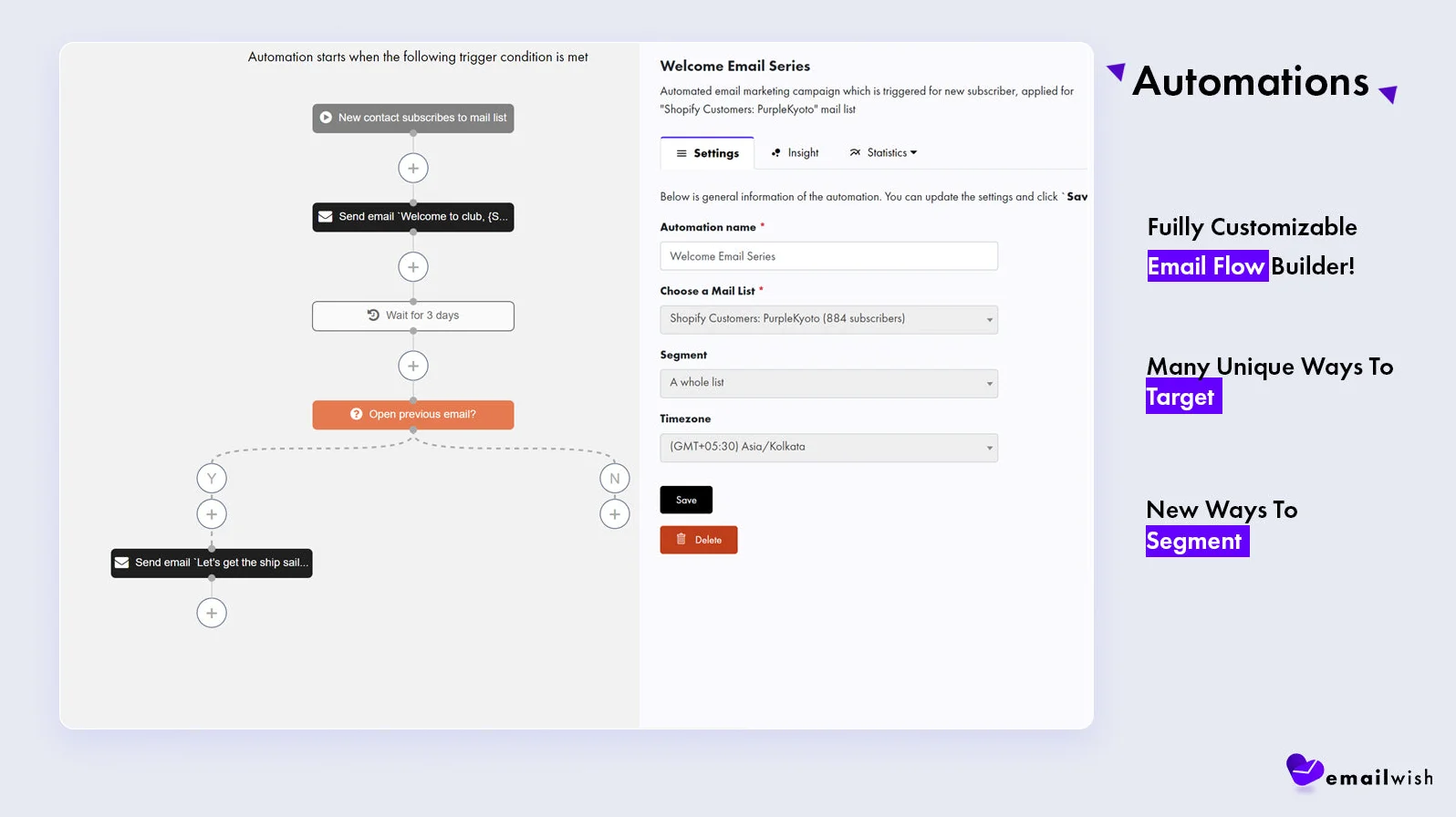
Emailwish is our app, and it’s the only one of the best Shopify apps here that covers five jobs at once. It’s built around one idea: most Shopify stores install five apps to do five jobs that belong together. It combines email marketing and automation, popups and forms, product reviews, live chat, wishlists and back-in-stock alerts, and all of them write to one customer profile.
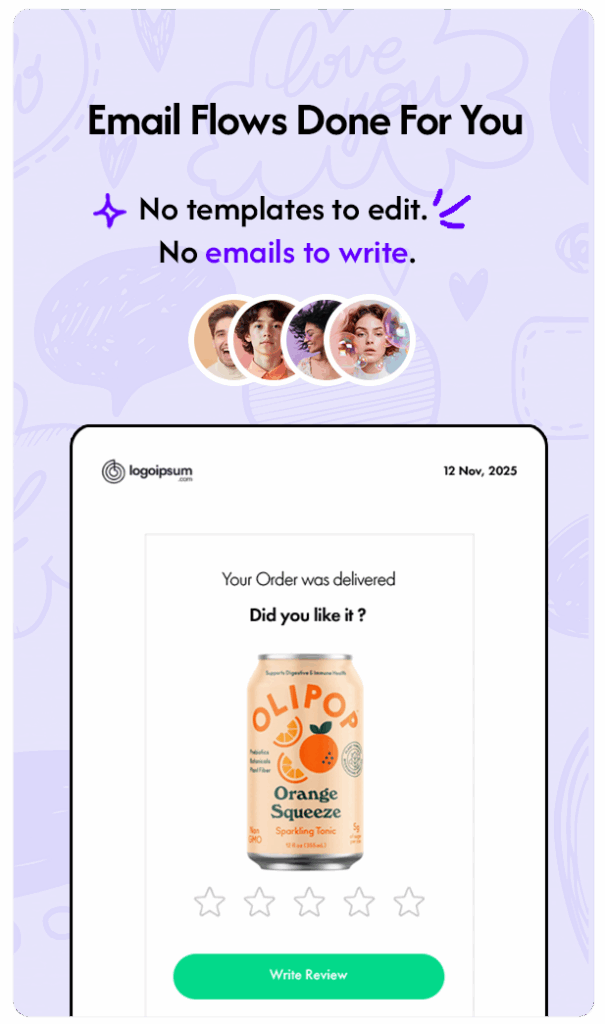
What happens when you install it. Emailwish reads your store name, logo, social links, products and brand details from Shopify. It then builds about 10 ready-to-send flows, including welcome, abandoned cart, review request, after-review, form signup and chat follow-up, with the images designed and the copy written in your brand’s voice. The only choice you make is a header and footer style. Every email, flow and segment stays editable.
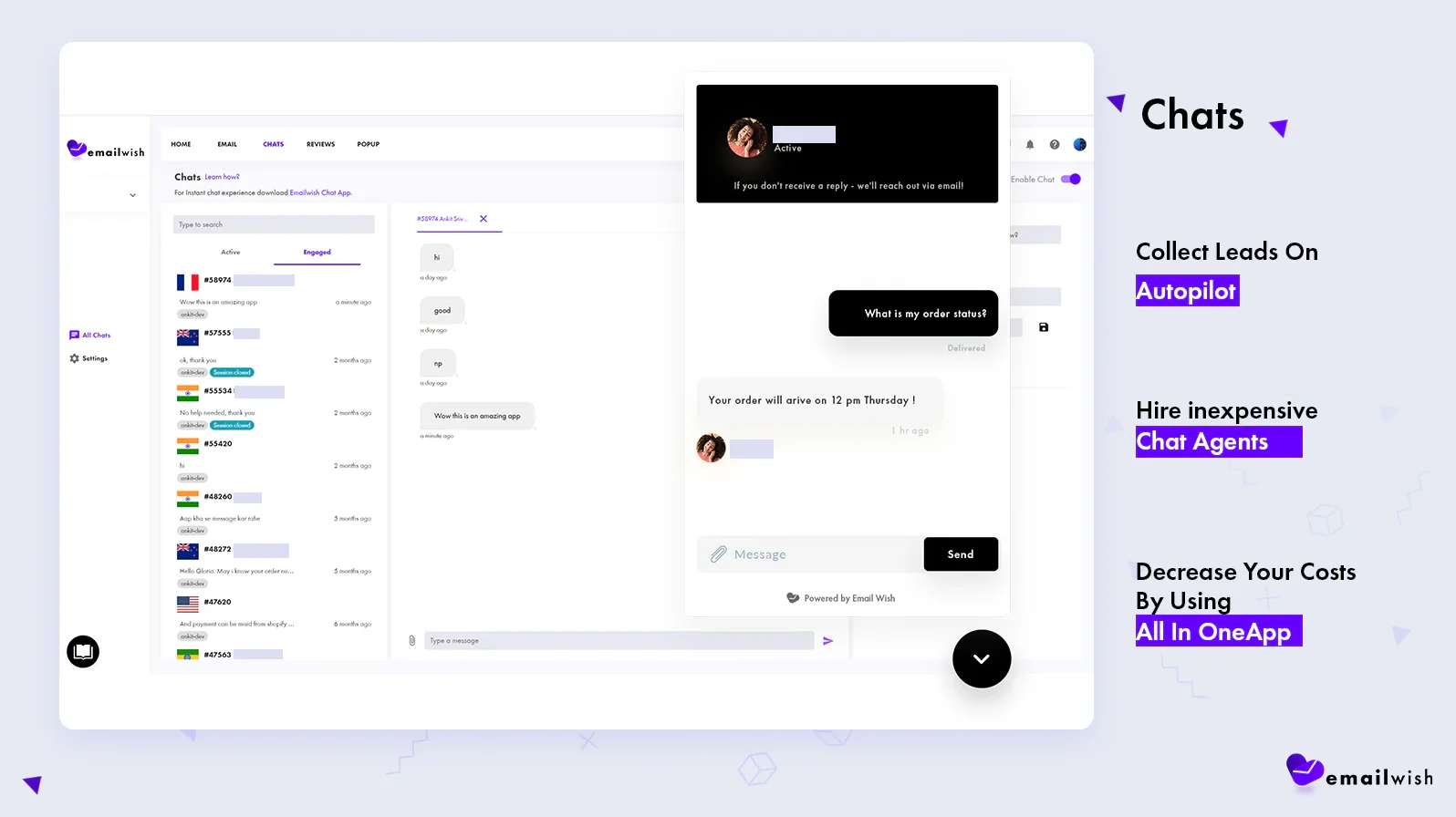
Why one profile matters. Because chat, reviews, popups and wishlists run natively, you can target behaviour that email-only apps never see. You can email a shopper who asked about sizing in chat but didn’t buy, follow up with a VIP who left a 2-star review, alert someone when a wishlisted item drops in price or comes back in stock, or tailor your welcome series to the answer a visitor gave in a popup. Shopify orders, products, browsing and checkout events sync in real time, and revenue reporting covers every flow and campaign.
What we liked
- Replaces separate email, review, popup, chat and wishlist apps, with one bill and one setup
- About 10 flows go live at install, with copy and images created from your store data
- Targeting on chat, review, popup and wishlist behaviour without integrations
- Launch covers 5,000 contacts and 10,000 emails for $35/month
- Live chat and email support on every plan, including Free
Where it could improve
- No SMS
- A/B testing is marked “coming soon”
- A younger app with fewer integrations than the long-established specialists, and only 7 App Store reviews so far
- Deliverability is a core focus, but our independent GMass results aren’t published yet
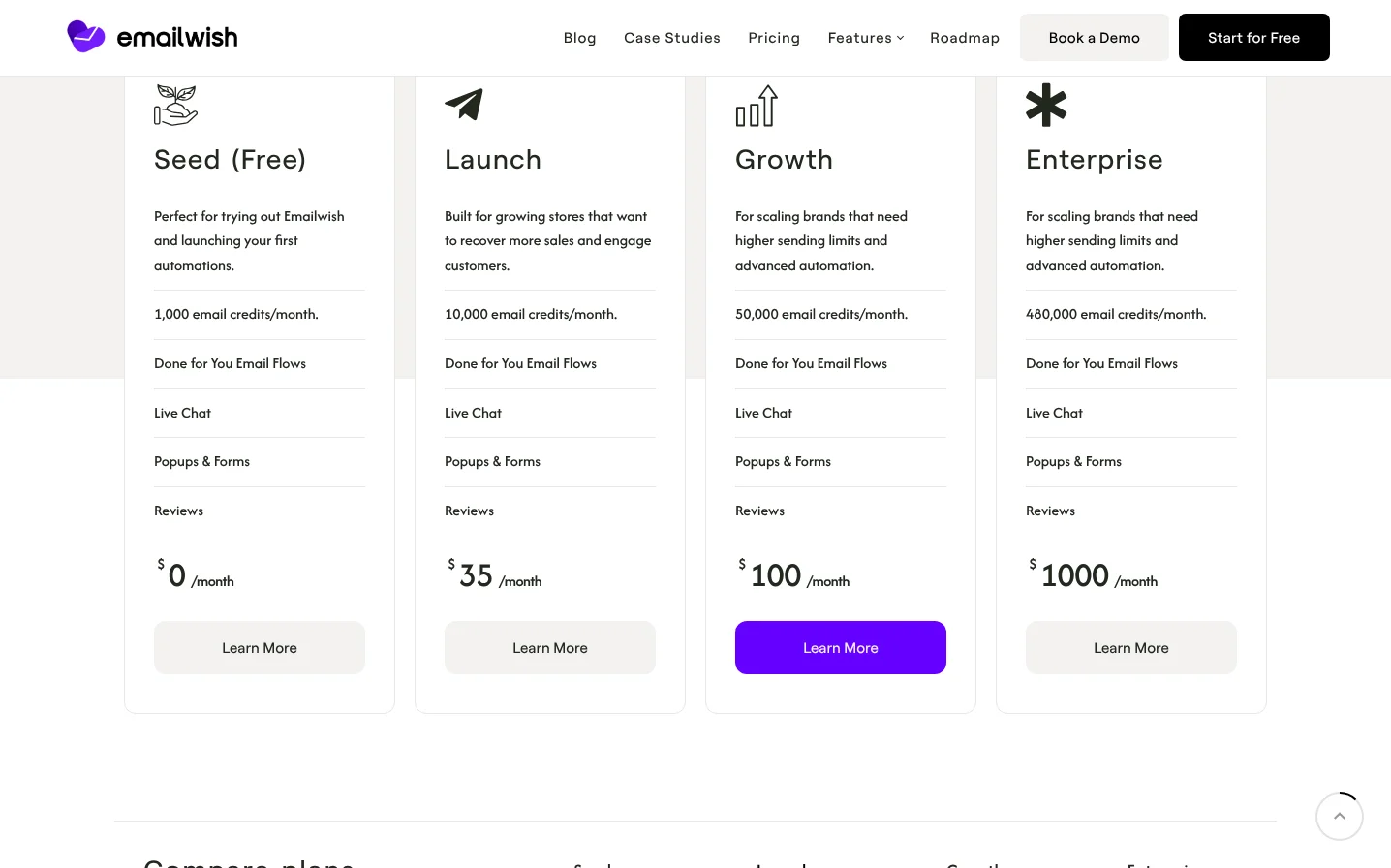
Pricing: Seed is free (100 contacts, 1,000 emails a month). Launch is $35/month (5,000 contacts, 10,000 emails, then $2 per 1,000 emails), Growth is $100/month (50,000 emails) and Enterprise is $1,000/month (480,000 emails). Pricing is per store and based mainly on email credits. Live chat, popups and forms, reviews, automations and templates are included on every plan.
Free plan or trial: a free plan, no trial of paid plans. Cancel any time.
Shopify and WooCommerce: installs from the Shopify App Store and also works with WooCommerce.
Who should consider it: stores without a dedicated marketer that want working automations this week, and any store paying for separate review, popup, chat and wishlist apps. You can browse the flows it builds in our email flow library, or read how HappyChien used it in our case studies.
2. Klaviyo
Best for email and SMS run by an agency or in-house marketer
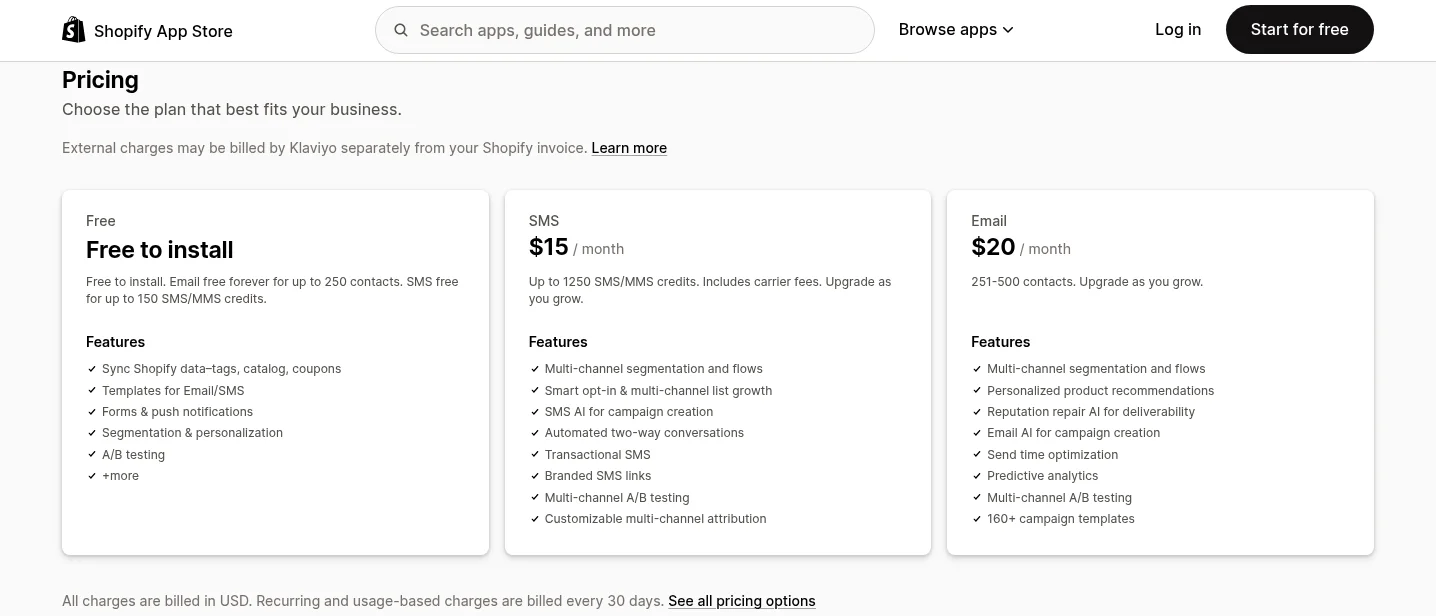
Klaviyo grew largely through agencies, and it’s built for that workflow: detailed dashboards, benchmarks and reporting that agencies can share with clients. It syncs Shopify tags, catalogue and coupons, and covers email, SMS, WhatsApp, mobile push and signup forms. New stores get a guided setup for a signup form, welcome email and abandoned-checkout flow inside Shopify admin. Beyond that, you or your agency build the flows and write the emails.
What we liked
- Email, SMS and WhatsApp in one platform
- Predictive analytics, send-time optimisation and multi-channel A/B testing
- 350+ integrations listed, so most specialist apps can push data into it
Where it could improve
- More setup effort than a done-for-you tool, and a steep learning curve without a dedicated marketer
- Reviews, chat and wishlists need separate apps, so targeting on that behaviour depends on integrations
Pricing (Klaviyo on the Shopify App Store, October 2026): free for up to 250 email contacts and 150 SMS/MMS credits. Email starts at $20/month for 251–500 contacts; SMS starts at $15/month for 1,250 credits. Prices rise with your contact count.
Free plan or trial: free plan.
Who should consider it: brands with an agency or in-house email marketer who need SMS today. For a full side-by-side of email tools, see our guide to the best email marketing apps for Shopify.
See how it compares: Klaviyo vs Emailwish.
3. Judge.me
Best free product reviews app
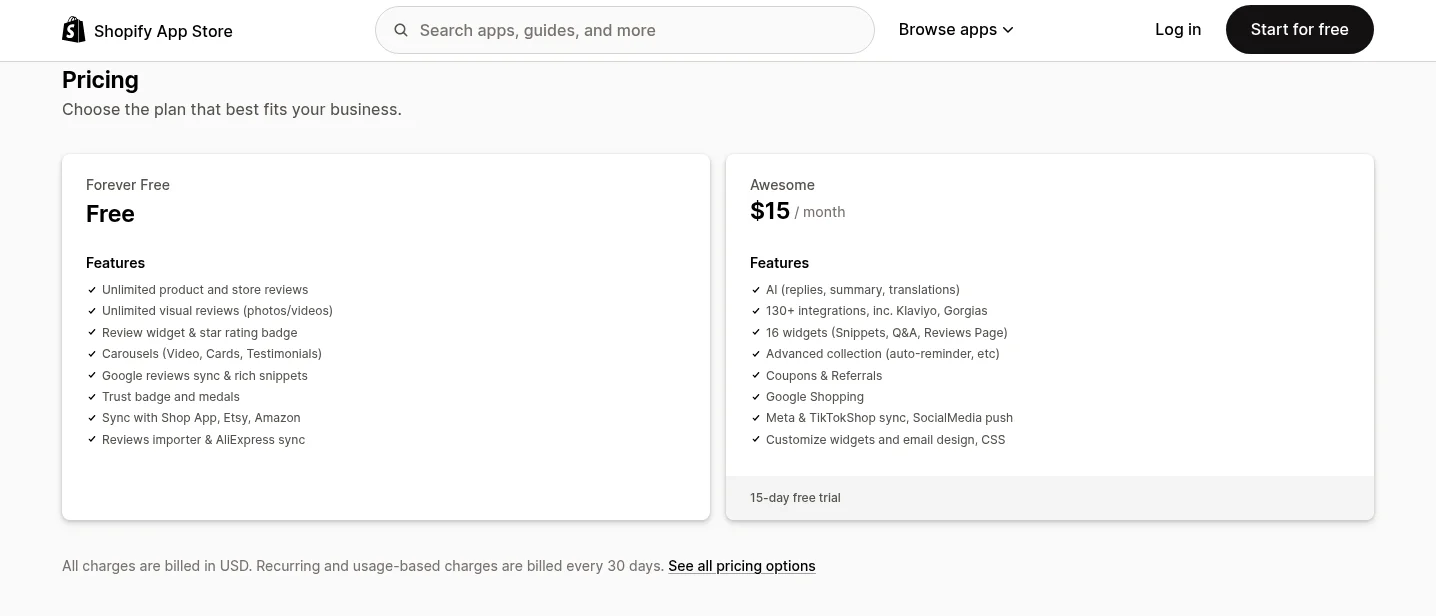
Judge.me has the most reviews of any app on this list, and its free plan is the reason. Forever Free includes unlimited product and store reviews, unlimited photo and video reviews, the review widget and star badge, Google rich snippets, Shop app sync and a reviews importer. Review requests go out automatically after fulfilment or delivery. If you want to compare it with other review tools, our roundup of Shopify review apps goes deeper.
What we liked
- Unlimited reviews, photos and videos on the free plan
- Imports from Etsy, Amazon and AliExpress
- The paid plan is a flat $15/month, not tied to order volume
Where it could improve
- Q&A, extra widgets, coupons and most integrations (including Klaviyo and Gorgias) need the paid plan
- Review behaviour only reaches your email targeting through those integrations
Pricing (Judge.me on the Shopify App Store, October 2026): Forever Free, or Awesome at $15/month with AI replies and summaries, 16 widgets, 130+ integrations, advanced review collection, coupons and referrals, and Google Shopping, Meta and TikTok Shop sync.
Free plan or trial: free plan, plus a 15-day free trial of Awesome.
Who should consider it: almost any store that needs reviews and doesn’t already have them in an all-in-one app. Pair it with good review request emails to get the most from it.
See how it compares: Judge.me vs Emailwish.
4. Loox
Best for photo and video reviews
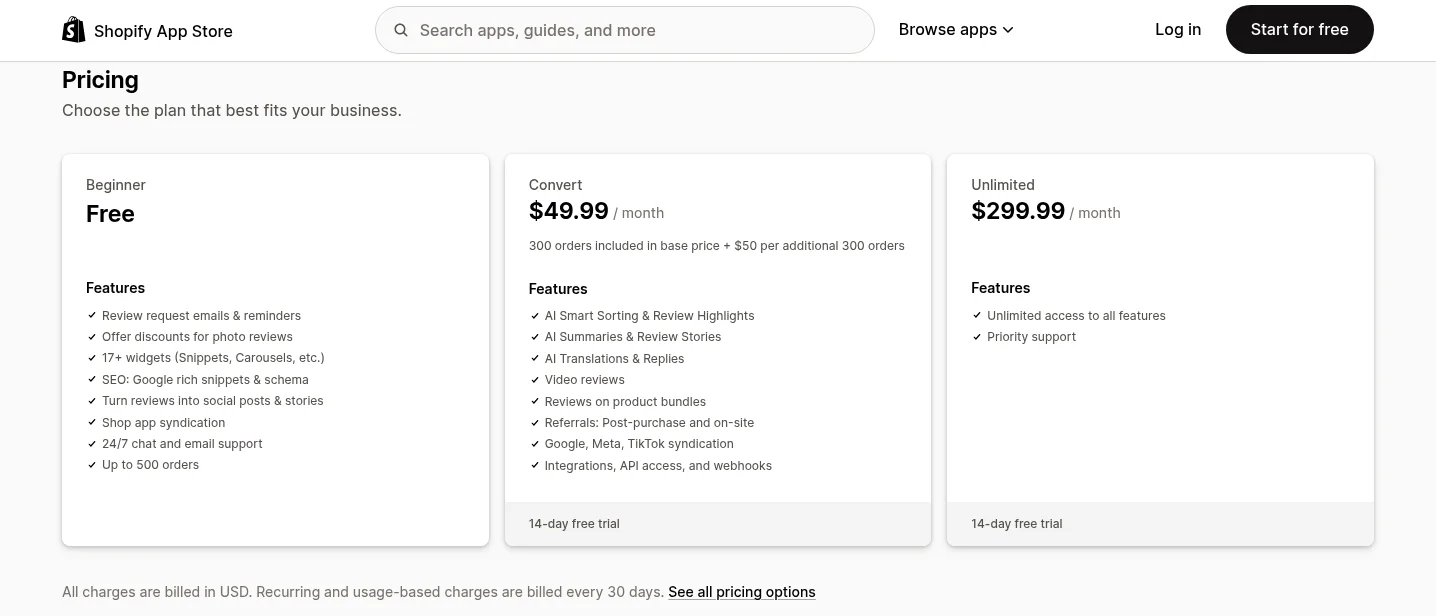
Loox is built for stores where the photo sells the product: apparel, beauty, home decor. It collects photo and video reviews through emails, QR codes and discounts, then shows them in widgets designed to match your brand. Its AI features sort the best visual reviews first, pull out key quotes and translate reviews for international shoppers.
What we liked
- Visual-first widgets that look good on mobile
- Discounts for photo reviews are included on the free plan
- Shop app syndication on the free plan; Google, Meta and TikTok syndication on paid plans
Where it could improve
- The free plan stops at 500 orders, and paid pricing scales with orders ($50 per extra 300)
- Video reviews, integrations and API access are on paid plans only
Pricing (Loox on the Shopify App Store, October 2026): Beginner is free up to 500 orders. Convert is $49.99/month with 300 orders included plus $50 per additional 300 orders. Unlimited is $299.99/month.
Free plan or trial: free plan, plus a 14-day free trial of paid plans.
Who should consider it: visual brands with steady order volume who see photo reviews as part of their marketing.
5. OptiMonk
Best for advanced popup targeting and A/B tests
OptiMonk takes a different approach from template-based popup builders. You tell its AI agent your goal and your store URL, and it builds a custom, on-brand popup, then suggests targeting, triggers and A/B tests. It also reads your store data to suggest new campaigns. For a wider look at the category, see our list of Shopify popup apps.
What we liked
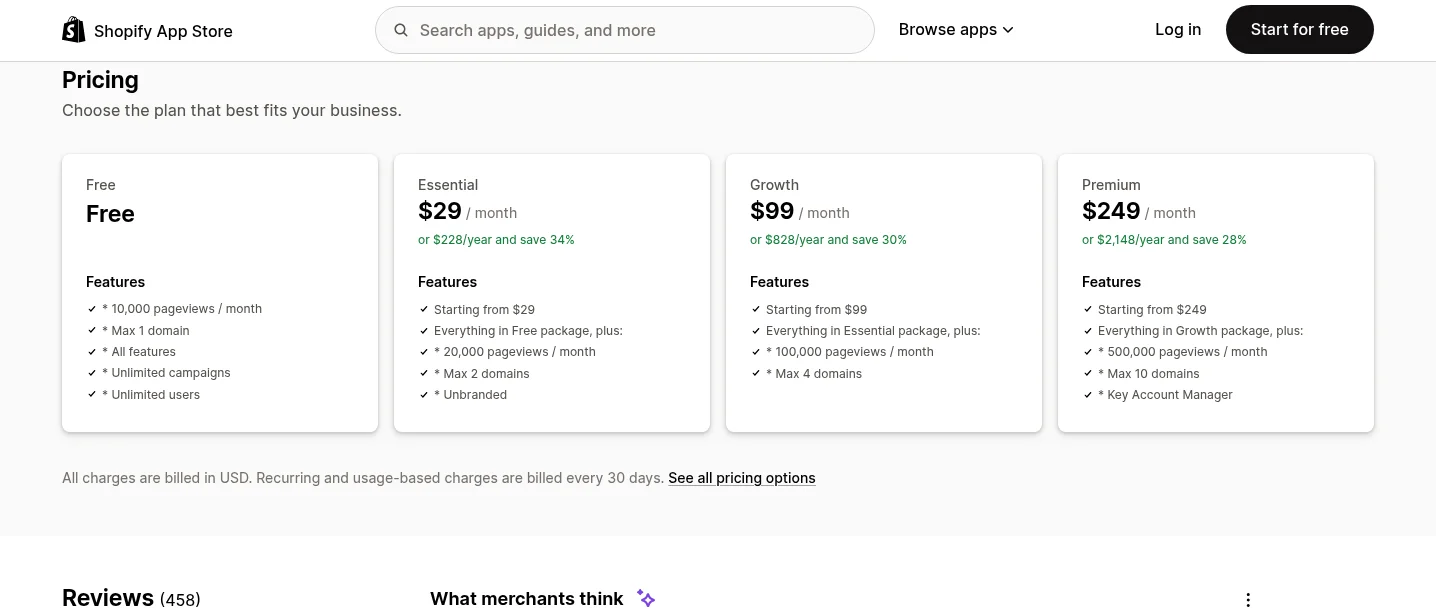
- Every feature is on the free plan; paid plans mainly add pageviews and domains
- A/B testing and campaign suggestions built in
- Unlimited campaigns and users on every plan
Where it could improve
- Pricing is by pageviews, so a traffic spike from a sale or ad campaign can push you up a tier
- Signups only drive email automation once you connect a separate email tool
Pricing (OptiMonk on the Shopify App Store, October 2026): Free covers 10,000 pageviews a month on one domain. Essential is $29/month (20,000 pageviews, unbranded), Growth is $99/month (100,000 pageviews) and Premium is $249/month (500,000 pageviews).
Free plan or trial: free plan.
Who should consider it: stores with enough traffic to run meaningful popup tests, or a marketer who wants fine control over targeting.
See how it compares: OptiMonk vs Emailwish.
6. Tidio
Best for live chat with an AI agent
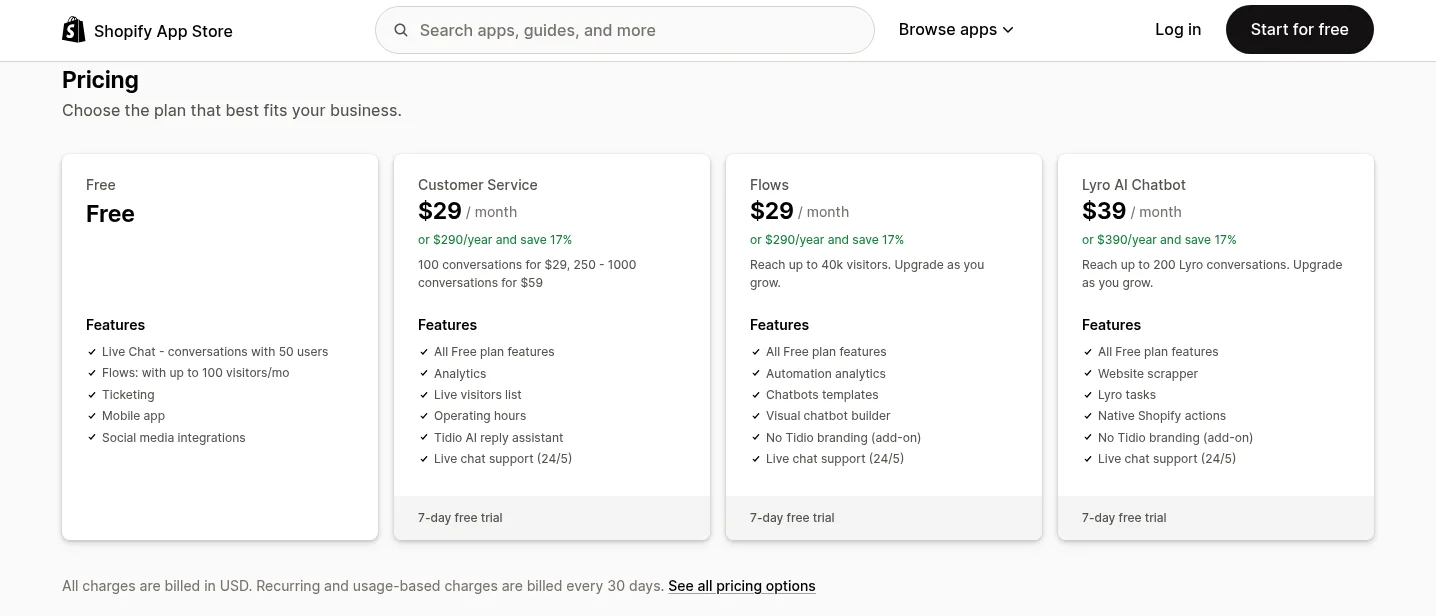
Tidio combines live chat, ticketing, visual chatbot flows and Lyro, its AI agent that answers questions using your store content and can take Shopify actions. It’s priced as separate modules, so you can start with chat and add the AI agent later. Our guide to Shopify chat apps compares it with other chat tools.
What we liked
- A usable free plan with live chat, ticketing and a mobile app
- Lyro AI agent with native Shopify actions
- Social media channels in the same inbox
Where it could improve
- Modules are priced separately, so chat plus chatbot flows plus Lyro adds up
- Chat conversations don’t feed your email targeting unless you integrate an email tool
Pricing (Tidio on the Shopify App Store, October 2026): Free covers live chat with 50 users and flows for up to 100 visitors a month. Customer Service is $29/month for 100 conversations (250–1,000 conversations for $59), Flows is $29/month and Lyro AI Chatbot is $39/month for up to 200 Lyro conversations.
Free plan or trial: free plan, plus a 7-day free trial of paid plans.
Who should consider it: stores that get repetitive pre-sale questions and want an AI agent to handle the first reply.
7. Shopify Inbox
Best free chat built by Shopify
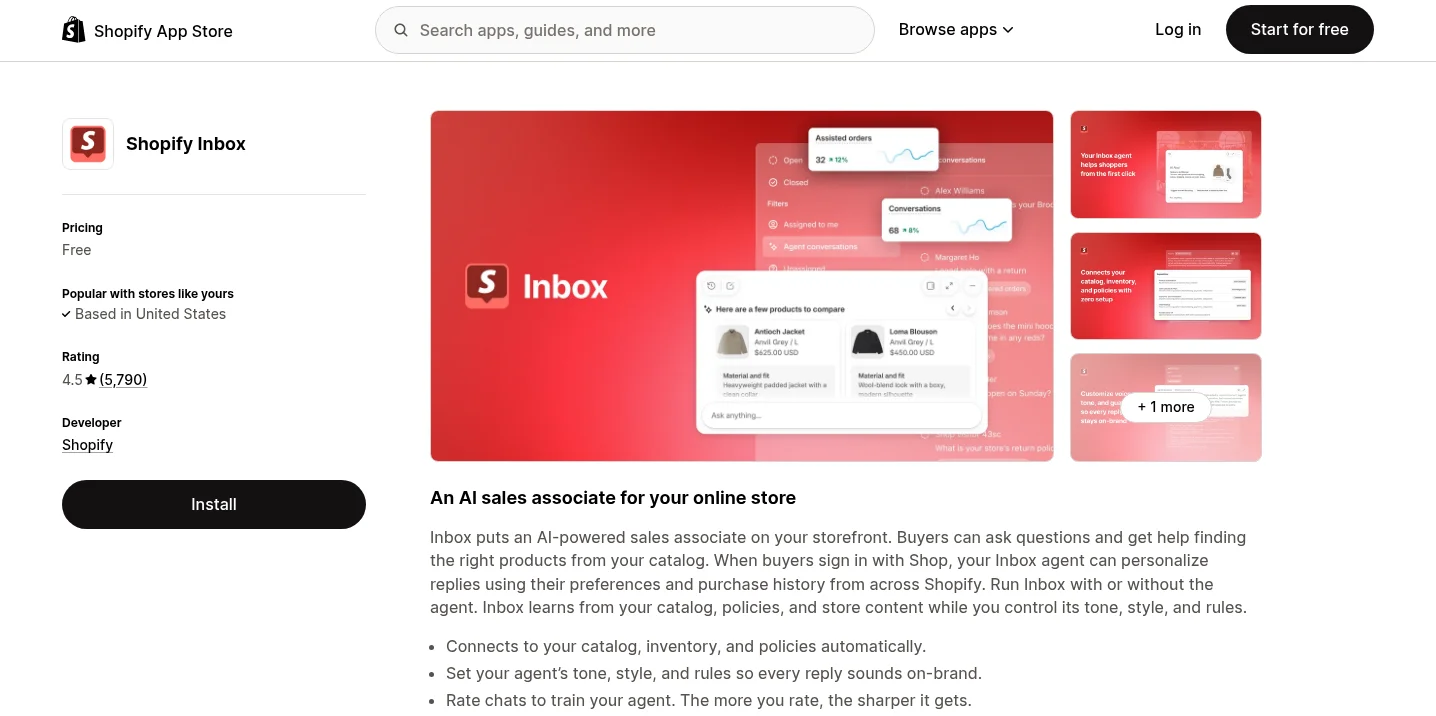
Shopify Inbox is Shopify’s own chat app. It now includes an AI sales associate that learns from your catalogue, inventory, policies and store content, and can personalise replies for shoppers signed in with Shop. You control its tone and rules, and you can run Inbox with or without the agent.
What we liked
- Free, and built and maintained by Shopify
- Connects to your catalogue and policies with no setup
- Built-in analytics on orders assisted and buyer satisfaction
Where it could improve
- No email marketing, so chat conversations don’t trigger follow-up flows
- Fewer helpdesk features than a dedicated support tool
Pricing (Shopify Inbox on the Shopify App Store, October 2026): free.
Free plan or trial: the app is free.
Who should consider it: new stores that want chat on day one at no cost, and stores happy to keep chat separate from email.
8. Gorgias
Best helpdesk for high support volume
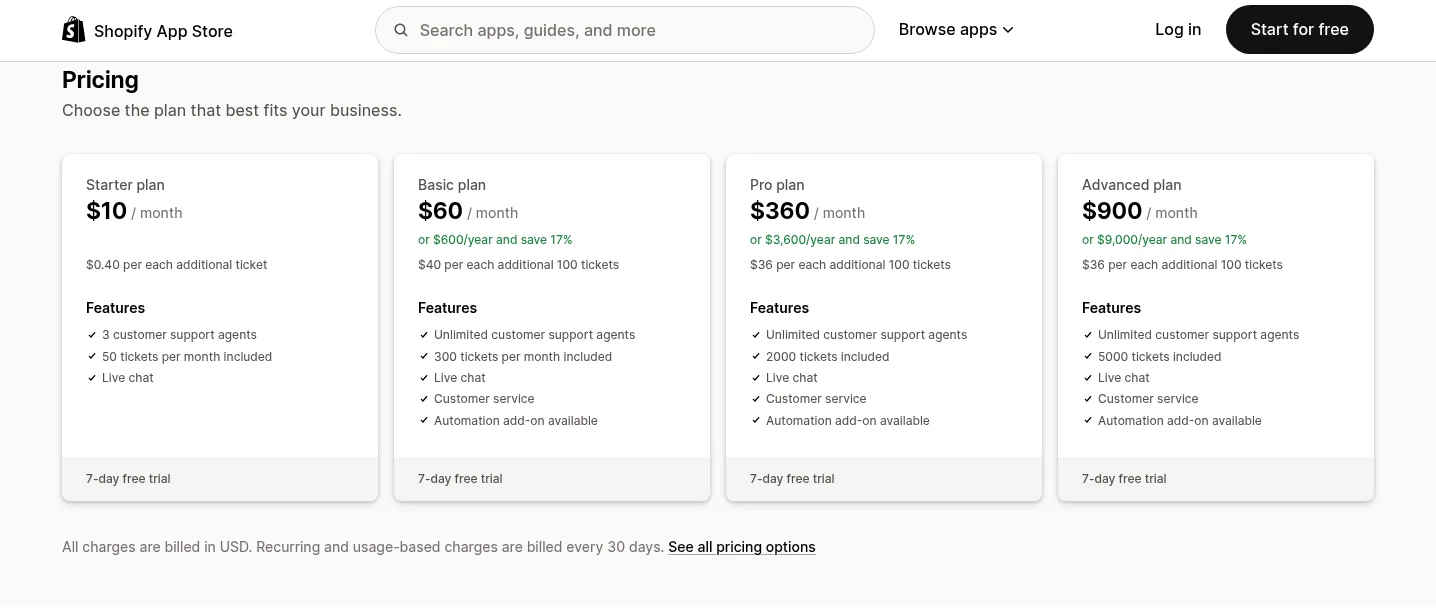
Gorgias is a helpdesk first and a chat widget second. It pulls email, chat, social and other channels into one ticket queue, and shows the customer’s Shopify orders next to each conversation so agents can edit orders without switching tabs. An AI agent and automation add-on handle repeat questions.
What we liked
- Shopify order data and actions inside every ticket
- Unlimited agents from the Basic plan up
- Scales well for teams handling hundreds of tickets a month
Where it could improve
- Priced by tickets, which gets expensive in busy seasons
- No free plan, and automation is a paid add-on
Pricing (Gorgias on the Shopify App Store, October 2026): Starter is $10/month (3 agents, 50 tickets, then $0.40 per ticket). Basic is $60/month (300 tickets), Pro is $360/month (2,000 tickets) and Advanced is $900/month (5,000 tickets).
Free plan or trial: 7-day free trial.
Who should consider it: stores with a dedicated support team and enough tickets that order lookups take real time.
See how it compares: Gorgias vs Emailwish.
9. Swym Wishlist Plus
Best standalone wishlist app
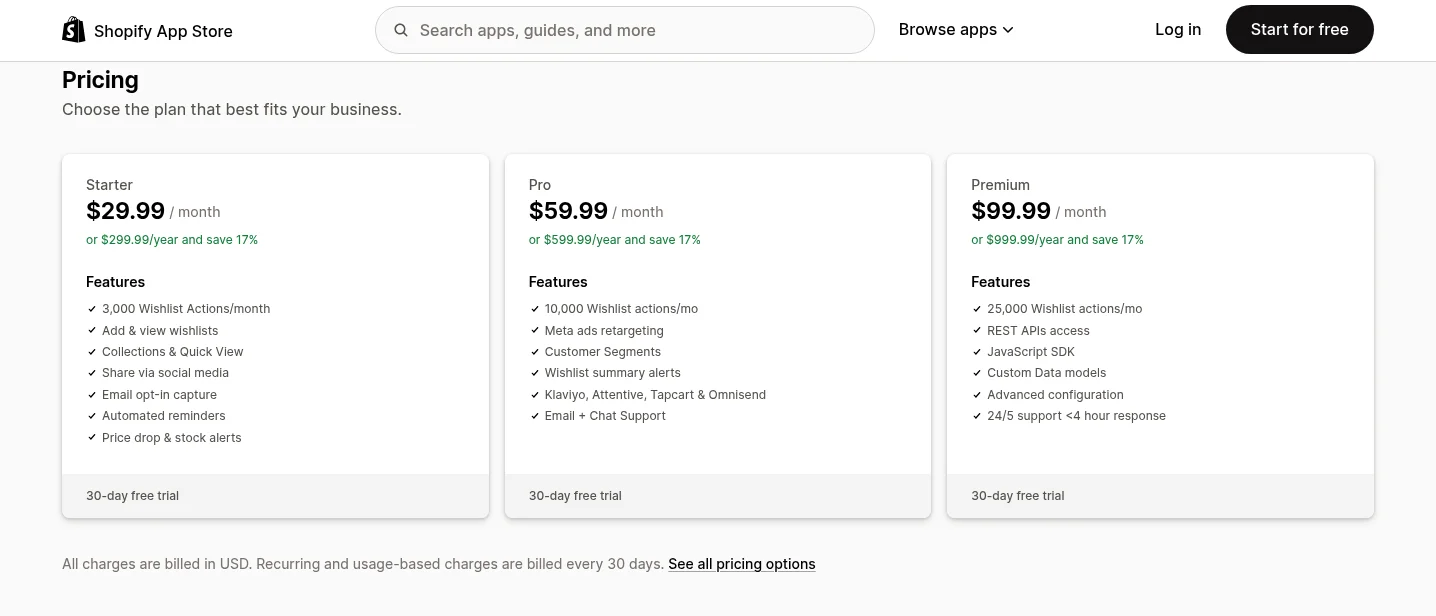
Swym Wishlist Plus adds an “Add to Wishlist” button, multiple and shareable wishlists, anonymous wishlists and Save for Later. It sends reminders, price-drop and back-in-stock alerts, and gives store staff access to customer wishlists through Shopify POS.
What we liked
- Every plan includes price-drop and stock alerts
- Works with Shopify POS for in-store staff
- A 30-day free trial, longer than most
Where it could improve
- No free plan, and pricing is by wishlist actions
- Sending wishlist data to Klaviyo, Attentive or Omnisend needs the $59.99 Pro plan
Pricing (Swym Wishlist Plus on the Shopify App Store, October 2026): Starter is $29.99/month (3,000 wishlist actions), Pro is $59.99/month (10,000 actions, segments and email integrations) and Premium is $99.99/month (25,000 actions and API access).
Free plan or trial: 30-day free trial.
Who should consider it: stores with large catalogues or omnichannel retail where wishlists are central to how people shop. If you’d rather keep wishlist data on the same profile as email, compare it with the Shopify wishlist app built into Emailwish.
See how it compares: Swym vs Emailwish.
10. Shopify Flow
Best free back-office automation
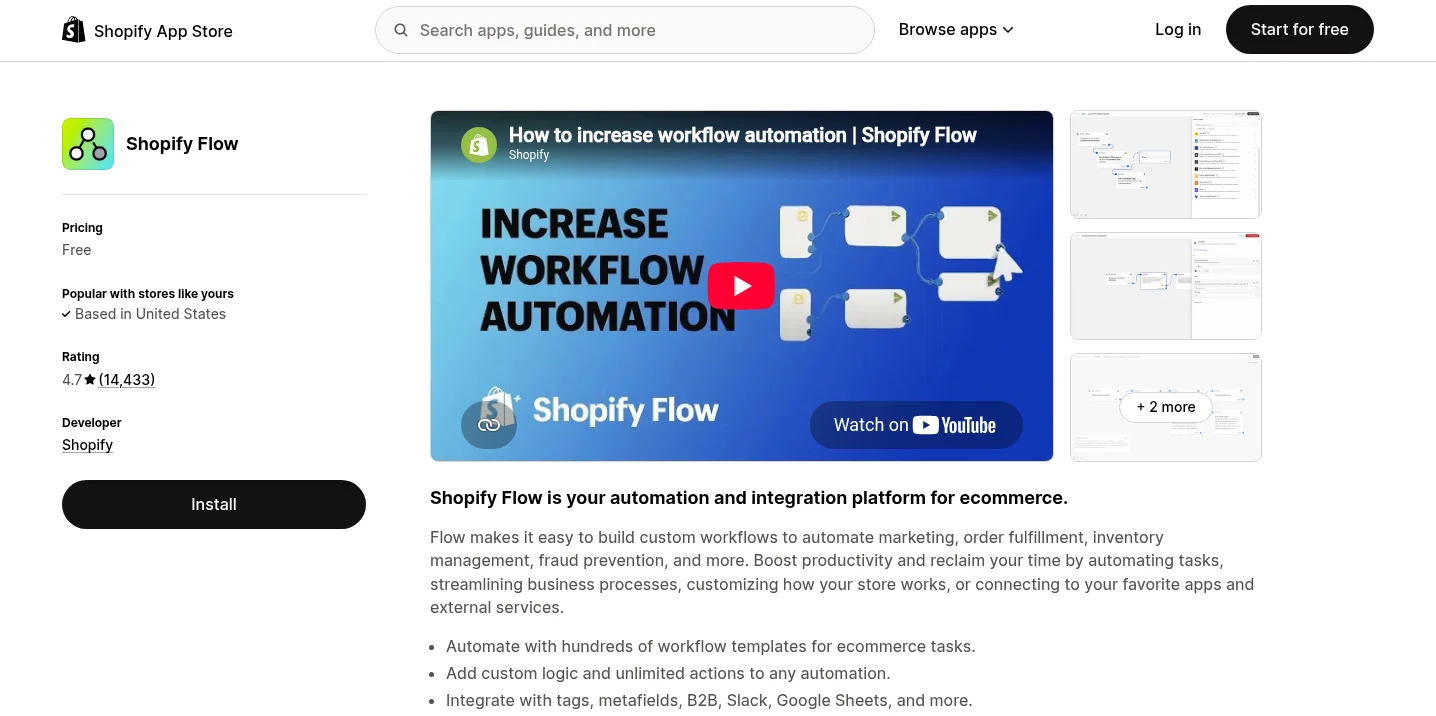
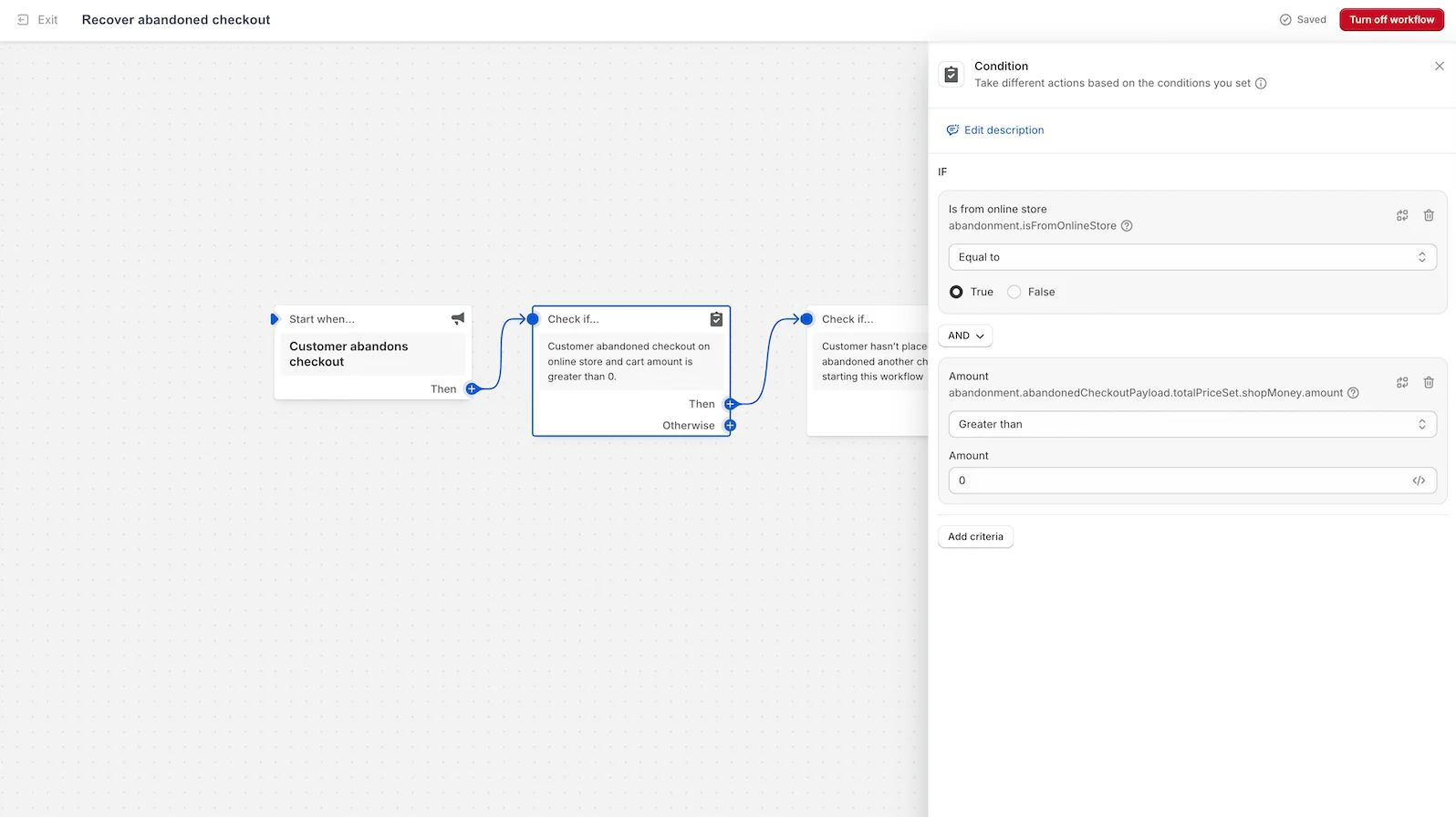
Shopify Flow is Shopify’s own automation app. It runs “when this happens, check this, then do that” workflows across orders, inventory, customers and products. Typical uses are tagging high-value customers, flagging risky orders, hiding out-of-stock products and sending a Slack message when inventory runs low. It has hundreds of templates and connects to tags, metafields, Slack, Google Sheets, Asana, Trello and Klaviyo.
What we liked
- Free, made by Shopify, and rated 4.7 from more than 14,000 reviews
- Hundreds of ready-made templates
- Custom logic and unlimited actions in each workflow
Where it could improve
- It’s for operations, not customer messaging; it won’t replace an email tool
- Complex workflows take some trial and error to get right
Pricing (Shopify Flow on the Shopify App Store, October 2026): free.
Who should consider it: every store once manual tagging, stock checks or order reviews start eating time.
11. Google & YouTube
Best free app for Google Shopping and YouTube
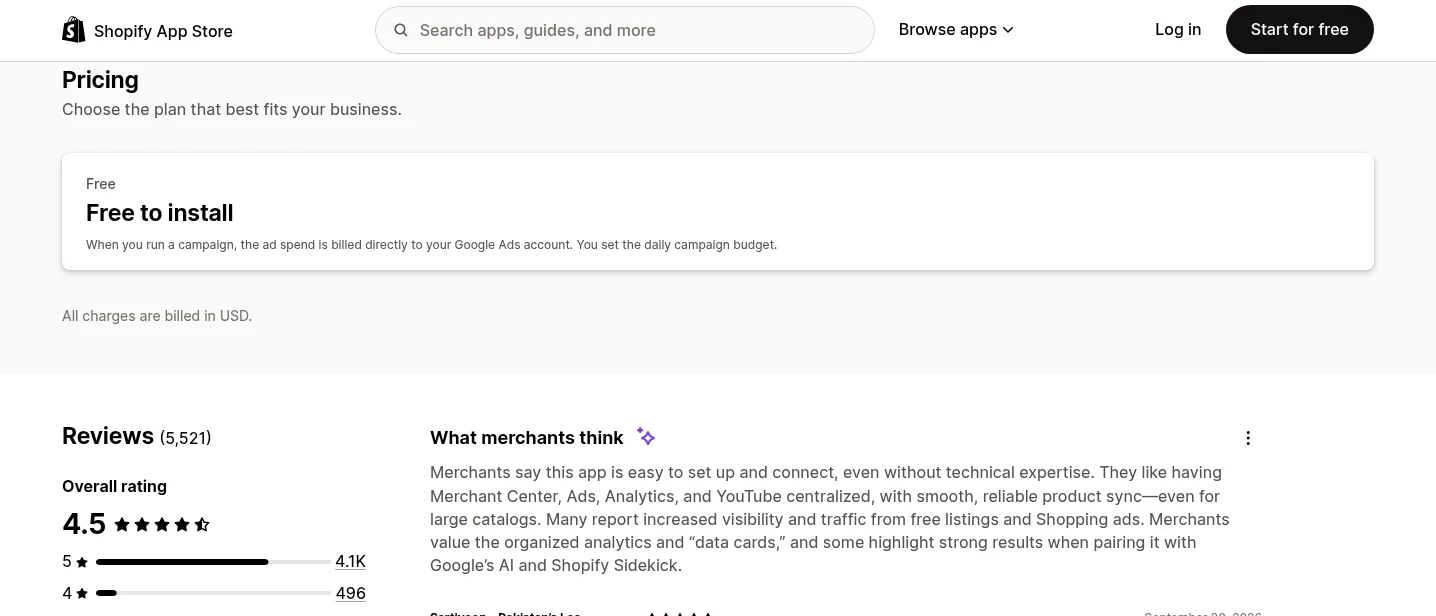
Google’s official Shopify app syncs your products, deals and shipping to Google Merchant Center, so they can appear in free listings and Shopping results. From the same app you can run Performance Max campaigns across Search and YouTube, connect YouTube for shoppable content and pull in Google Analytics insights. To track the traffic it brings, it helps to install Google Analytics on your Shopify store properly first.
What we liked
- Free product listings on Google with no ad spend required
- Merchant Center, Ads, Analytics and YouTube managed from Shopify
- Product sync keeps prices and stock up to date
Where it could improve
- Ads can burn budget quickly without a clear product feed strategy
- Feed errors in Merchant Center still need fixing on Google’s side
Pricing (Google & YouTube on the Shopify App Store, October 2026): free to install. Ad spend is billed by Google to your Google Ads account, at a daily budget you set.
Who should consider it: every Shopify store. Free listings alone justify it, and it works well alongside good SEO for Shopify.
12. DSers
Best for AliExpress dropshipping
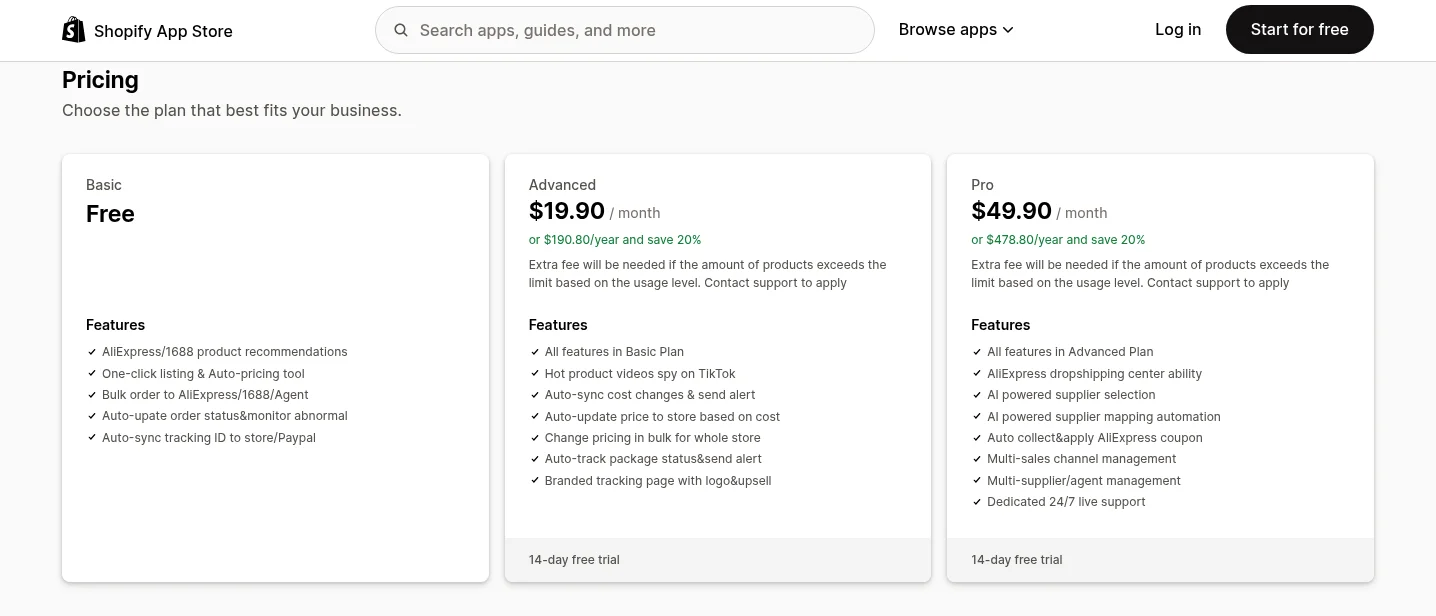
Oberlo, the dropshipping app the old version of this guide recommended, closed in 2022. DSers covers the same job: it imports products from AliExpress, 1688 and other suppliers in one click, places supplier orders in bulk and syncs tracking numbers back to your store and PayPal. Paid plans add automatic price and stock sync, branded tracking pages and multi-supplier management. If you’re new to the model, start with what dropshipping is and how margins work.
What we liked
- A free plan that covers importing, bulk ordering and tracking sync
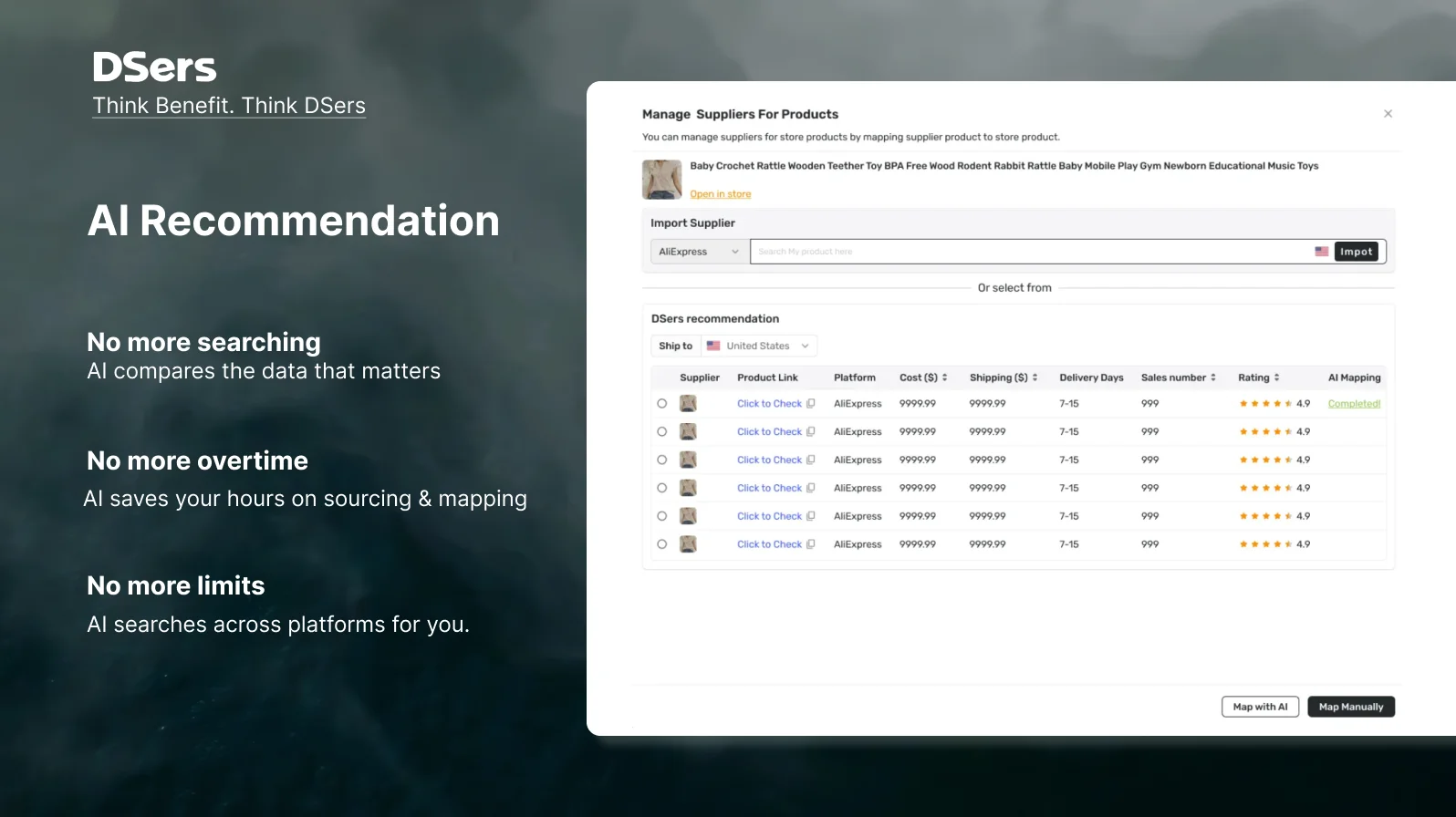
- Supplier mapping to switch suppliers without relisting
- Annual billing saves 20%
Where it could improve
- Automatic cost-change sync and price updates need a paid plan
- Extra fees apply above product limits
Pricing (DSers on the Shopify App Store, October 2026): Basic is free. Advanced is $19.90/month and Pro is $49.90/month, with extra fees above each plan’s product limit.
Free plan or trial: free plan, plus a 14-day free trial of paid plans.
Who should consider it: dropshippers sourcing from AliExpress or 1688.
13. Printful
Best for print on demand
Printful prints, packs and ships custom products, such as t-shirts, embroidery, wall art and blankets, only when a customer orders. You design with its built-in tools and mockup generator, push products to Shopify, and pay for fulfilment and shipping per order. It also supports custom branding on packaging and pack-ins. Our guide to print on demand explains how the model works.
What we liked
- No upfront stock; you pay when you sell
- Built-in design tools and mockups
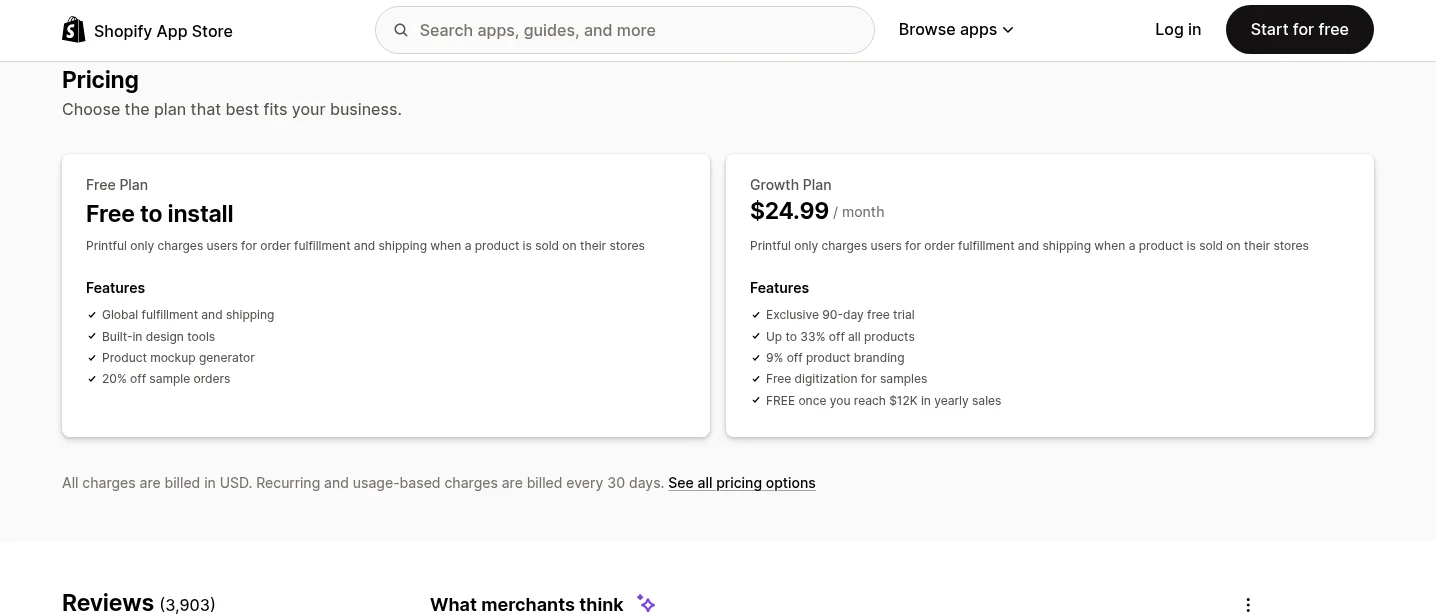
- The Growth plan becomes free once you reach $12K in yearly sales
Where it could improve
- Per-item costs are higher than bulk printing, so margins are thinner
- Growth plan discounts matter mostly at higher volume
Pricing (Printful on the Shopify App Store, October 2026): free to install; Printful charges for fulfilment and shipping when a product sells. The Growth plan is $24.99/month, with up to 33% off products and 9% off branding.
Free plan or trial: free plan; 90-day free trial of Growth.
Who should consider it: creators and brands testing designs without holding stock.
Should you use one app or many?
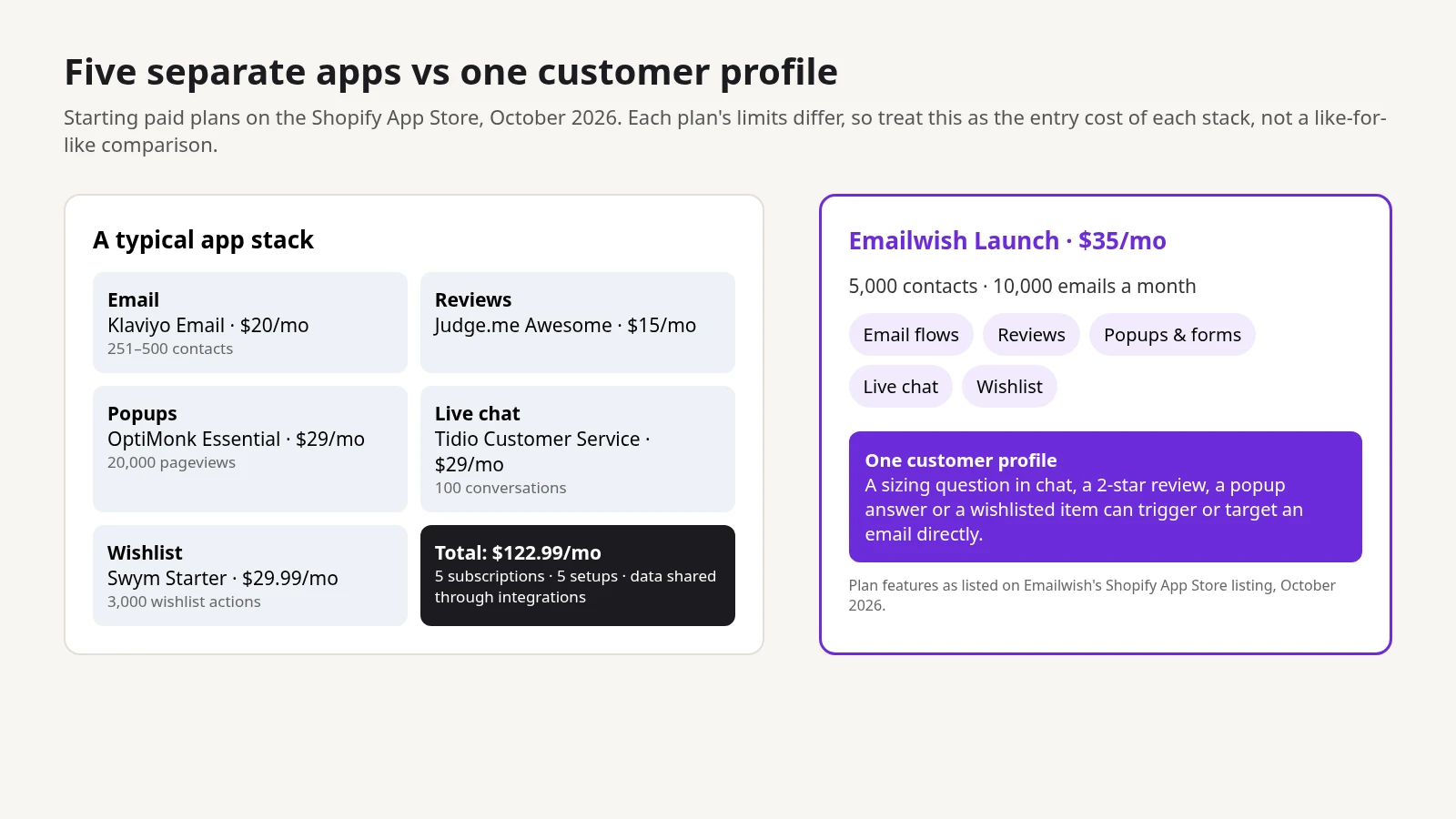
Most Shopify stores grow into a stack: one app for email, one for reviews, one for popups, one for chat, one for wishlists. Using the starting paid plans above, that stack costs $122.99 a month before you’ve grown at all, and it means five setups, five sets of storefront scripts and five places to update when you change a discount or a brand colour.
The bigger cost is lost targeting. When chat lives in Tidio, reviews in Judge.me and wishlists in Swym, your email tool sees that behaviour only through integrations, often only on paid plans, and sometimes not at all. That’s why a shopper who asked about sizing and left, or a loyal customer who just left a bad review, so often gets the same generic email as everyone else. Emailwish runs all of those jobs natively on one profile, so each signal can trigger or target an email directly, starting at $35 a month for 5,000 contacts.
The best Shopify apps for your store are the fewest that cover every job. Start with Emailwish for email, reviews, popups, chat and wishlists, then add apps only for the jobs it doesn’t do: fulfilment with DSers or Printful, free product listings with Google & YouTube, and order tagging with Shopify Flow.
How to choose the best Shopify apps for your store
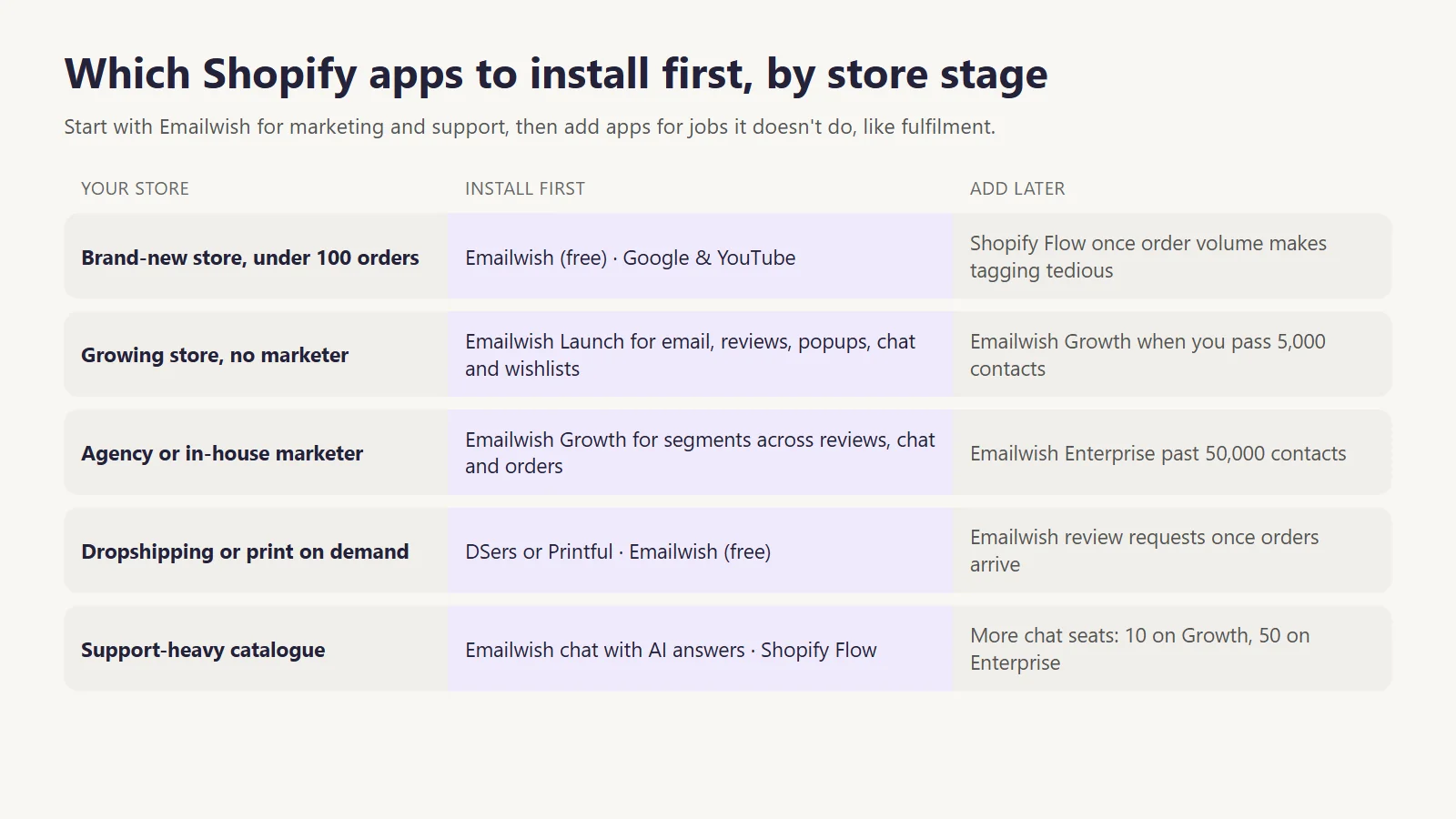
- Brand-new store: Emailwish’s free plan for email, popups, reviews, chat and wishlists, plus Google & YouTube for free listings.
- Growing store with no marketer: Emailwish Launch. Prebuilt flows go live at install, and you avoid paying for four extra apps.
- Store with an agency or in-house marketer: Emailwish Growth. Segments combine review, chat, popup and wishlist activity with order data, and revenue reporting covers every flow and campaign.
- Dropshipping or print on demand: DSers or Printful for fulfilment, plus Emailwish to recover abandoned carts from day one.
- Support-heavy store: Emailwish for live chat with AI answers and order tracking, plus Shopify Flow for order tagging and alerts.
FAQ: best Shopify apps
1. What are the best Shopify apps for a new store?
Start with the jobs that affect revenue first: capturing emails and recovering abandoned carts, collecting reviews, and getting listed on Google. For email, reviews, popups, chat and wishlists in one app, Emailwish’s free plan covers all five; Judge.me’s free plan covers unlimited reviews; and Google & YouTube is free to install.
2. Are there free Shopify apps worth installing?
Yes. Shopify Flow, Shopify Inbox and Google & YouTube are free to install. Emailwish, Judge.me, Loox, OptiMonk, Tidio and DSers all have free plans, though each limits something: contacts, orders, pageviews or chat users.
3. How many apps should a Shopify store have?
There’s no right number, but every app adds cost, setup and storefront scripts. Cover each job once, and look for apps that handle related jobs together so customer data stays in one place.
4. Can I target customers based on chats, reviews or wishlists?
Only if your email tool can see that data. With separate apps, it depends on integrations, which are often limited to paid plans. Emailwish runs chat, reviews, popups and wishlists natively, so you can segment and trigger flows on that behaviour without connecting anything.
5. Which Shopify apps help increase sales fastest?
Abandoned cart emails, product reviews and an email signup popup usually pay back first, because they act on shoppers who are already on your site. Free Google listings add new traffic at no cost.
6. Do Shopify apps slow down my store?
Storefront apps can, because each loads its own scripts. Apps that use theme app extensions add widgets as theme editor blocks rather than code edits, which makes them easier to manage. Fewer storefront apps generally means fewer scripts on your product pages.
7. Which Shopify email app has the best deliverability?
We’re running an identical GMass inbox-placement test on the email apps in this guide and will publish the results here soon.
Best Shopify Apps: Conclusion
The best Shopify apps differ less in what they promise than in how much work they need and how much of your customers’ behaviour they can use. Specialists like Judge.me, Loox, OptiMonk, Tidio, Gorgias and Swym each do one job well, but each keeps its data to itself unless you pay for integrations. Shopify Flow, Shopify Inbox and Google & YouTube are free and worth installing almost everywhere, and DSers or Printful are the obvious starting points if you dropship or sell print on demand.
If you’d rather cover email, reviews, popups, chat and wishlists with one app, and target customers on what they do across all of them, install Emailwish free and have your first flows live today.
Disclosure: Emailwish is our own product and is listed first. Every other app was judged against the same criteria using its public pricing and Shopify App Store listing as of October 2026. We earn no affiliate commissions.
We keep our content up to dateSee latest updates
- – Full rewrite: discontinued and outdated apps replaced with 13 current Shopify App Store apps, prices and ratings checked in October 2026, comparison table, buying criteria, methodology and FAQ added.
- – Published


Written and fact-checked under our editorial policy. About Emailwish.