
Choosing between email marketing apps for Shopify comes down to three questions: how much of your store data the app can use, how long it takes to get your first automations live, and what it really costs once your list grows. Most “best of” lists compare features on paper. This guide compares the things Shopify merchants actually feel: setup time, prebuilt flows, pricing at real list sizes, and how many other apps you still need to install alongside your email tool. It also looks at something most comparisons miss: how much customer behaviour beyond orders and email opens, such as chats, reviews, popup answers and wishlist activity, each app can actually use for targeting.
Below you’ll find a quick comparison table, our methodology, and a detailed review of each of the 11 best email marketing apps for Shopify, followed by an FAQ. Selling on more than Shopify? Compare the best email marketing platforms for ecommerce, or see the best email marketing tools for WooCommerce.
The 11 best email marketing apps for Shopify, ranked
Here’s our list of the 11 best email marketing apps for Shopify, ranked:
- Emailwish – Best for easy email setup, deeper targeting, higher deliverability and lower pricing
- Klaviyo – Best for agencies managing Shopify clients
- Omnisend – Best for email and SMS on a budget
- Shopify Email Marketing – Best for brand-new stores
- Mailchimp – Best for newsletters
- Privy – Best for popups and list growth
- Brevo – Best for low-cost sending
- ActiveCampaign – Best for advanced automation
- Drip – Best for ecommerce-only automation
- Kit – Best for creators
- MailerLite – Best for simple, affordable newsletters
Quick comparison: the best email marketing apps for Shopify
| App | Best for | Free plan | Paid plans from | SMS | Targeting beyond email and orders | Shopify App Store rating |
|---|---|---|---|---|---|---|
 Emailwish Emailwish | Easy email setup, deeper targeting, higher deliverability and lower pricing | Yes100 contacts, 1,000 emails/mo | $35/mo(5,000 contacts, 10,000 emails) | No |
| (7 reviews) |
 Klaviyo Klaviyo | Agencies and brands with a dedicated marketer who need detailed client reporting | Yes250 contacts | $20/mo(251–500 contacts) | Yesfrom $15/mo |
| (3,334) |
 Omnisend Omnisend | Email + SMS on a budget | Yes250 contacts, 500 emails/mo | $16/mo(up to 500 contacts) | Yesfrom $0.007/message |
| (3,179) |
 Shopify Email Marketing Shopify Email Marketing | Brand-new stores sending simple campaigns | Yes10,000 emails/mo | $1 per 1,000 emailsafter that | No | No | (4,573) |
 Mailchimp Mailchimp | Newsletters and general marketing | Yes | $13/mo(Essentials) |
|
| (1,496) |
 Privy Privy | List growth with popups first | No | $24/mo(popups), $30/mo (email) | Yesfrom $45/mo |
| (4,213) |
 Brevo Brevo | Low-cost sending, transactional email | Yes300 emails/day | $9/mo(Starter) | Yes |
| Not rated |
 ActiveCampaign ActiveCampaign | Advanced automation and CRM | No14-day trial | $19/mo(Starter) | Yes |
| (260) |
 Drip Drip | Ecommerce-only automation | No14-day trial | $39/mo | No |
| (55) |
 Kit Kit | Creators selling on Shopify | Yesup to 10,000 subscribers | $33/mo(Creator, 1,000 subs) | No |
| Not rated |
 MailerLite MailerLite | Simple, affordable newsletters | Yes250 subscribers, 2,500 emails/mo | $10.80/mo(Comfort, 500 subs) | No |
| Not rated |
Prices are the starting monthly price shown on each vendor’s pricing page or Shopify App Store listing in October 2026. Most scale with your contact count. A dash means we couldn’t confirm a rating for the vendor’s current Shopify app. For head-to-head pages, browse all our email marketing app comparisons.
What to look for in an email marketing app for Shopify (and how we chose)
We scored every Shopify email app on the same criteria. The first five carry the most weight because they decide whether your emails actually make money. Full details of how we score, price-check and update roundups are in our editorial policy.
- Deliverability. Do your emails land in the inbox, or are your Shopify emails going to spam? Test coming soon: we’re running an identical inbox-placement test for every tool on this list using GMass, and we’ll publish the results here and in our ranking of the best email platforms for deliverability.
- Ease of use and setup time. How long does it take from installing the app to having your first automated flow live? Hours of setup is a real cost for a small team.
- Prebuilt flows. How many Shopify email flows (welcome, abandoned cart, browse abandonment, post-purchase, winback, review request) come ready to switch on, and how much do you still have to write and design yourself?
- Built-in functionality versus integrations. Does the app include chat, reviews, popups and wishlists, or do you need separate apps for each? More integrations isn’t automatically better. Each one is another subscription, another setup that can take days to get right, and another place where data can fall out of sync. Native tools also allow much deeper targeting, because every chat, review, popup answer and wishlist add lands on the same customer profile your emails use. For example, you can target a shopper who started a chat and then abandoned their cart, or a VIP customer who just left a negative review. That’s very hard to do when chat, reviews and email live in three different apps.
- Shopify data connection. Does it sync orders, products, browsing and checkout events in real time, or only customer names and email addresses?
- Real price as you grow. What does it really cost at 500, 2,500 and 10,000 contacts, and what does the free plan actually include?
- Revenue reporting. Can you see how much each flow and campaign earned?
- SMS and other channels. Is SMS included, a paid add-on, or unavailable?
- Support. Is live chat available, on which plans, and do they help with ESP migration when you move over from another tool?
- Templates and design. Are there ecommerce-ready templates, and does the editor produce emails that look good on mobile?
- Compliance. GDPR support, consent tracking and double opt-in.
- Shopify App Store rating (lower weight). Useful as a signal, but ratings favour older apps with huge install bases, so we weighed them less than hands-on criteria.
1. Emailwish
Best for easy email setup, deeper targeting, higher deliverability and lower pricing
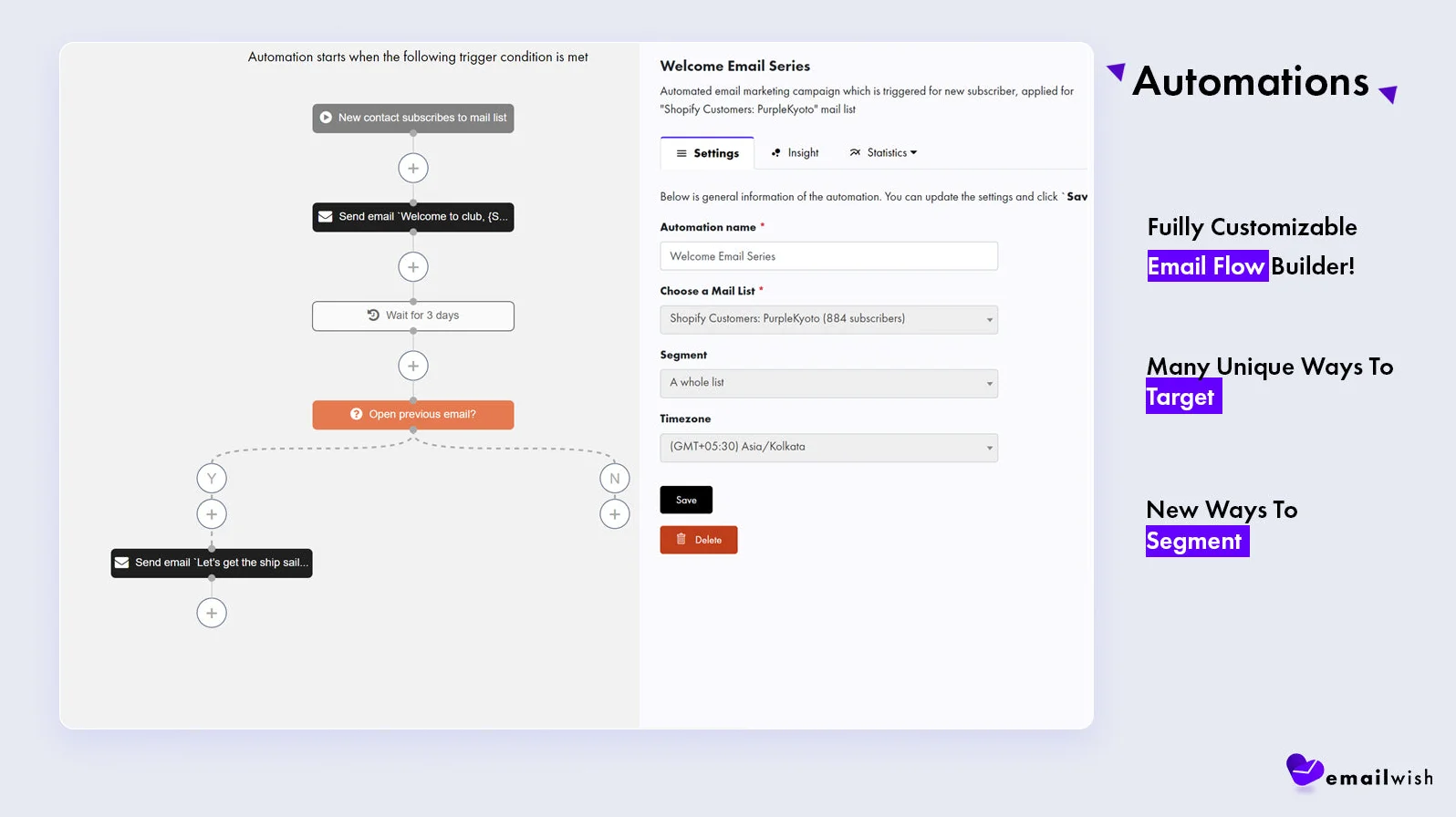
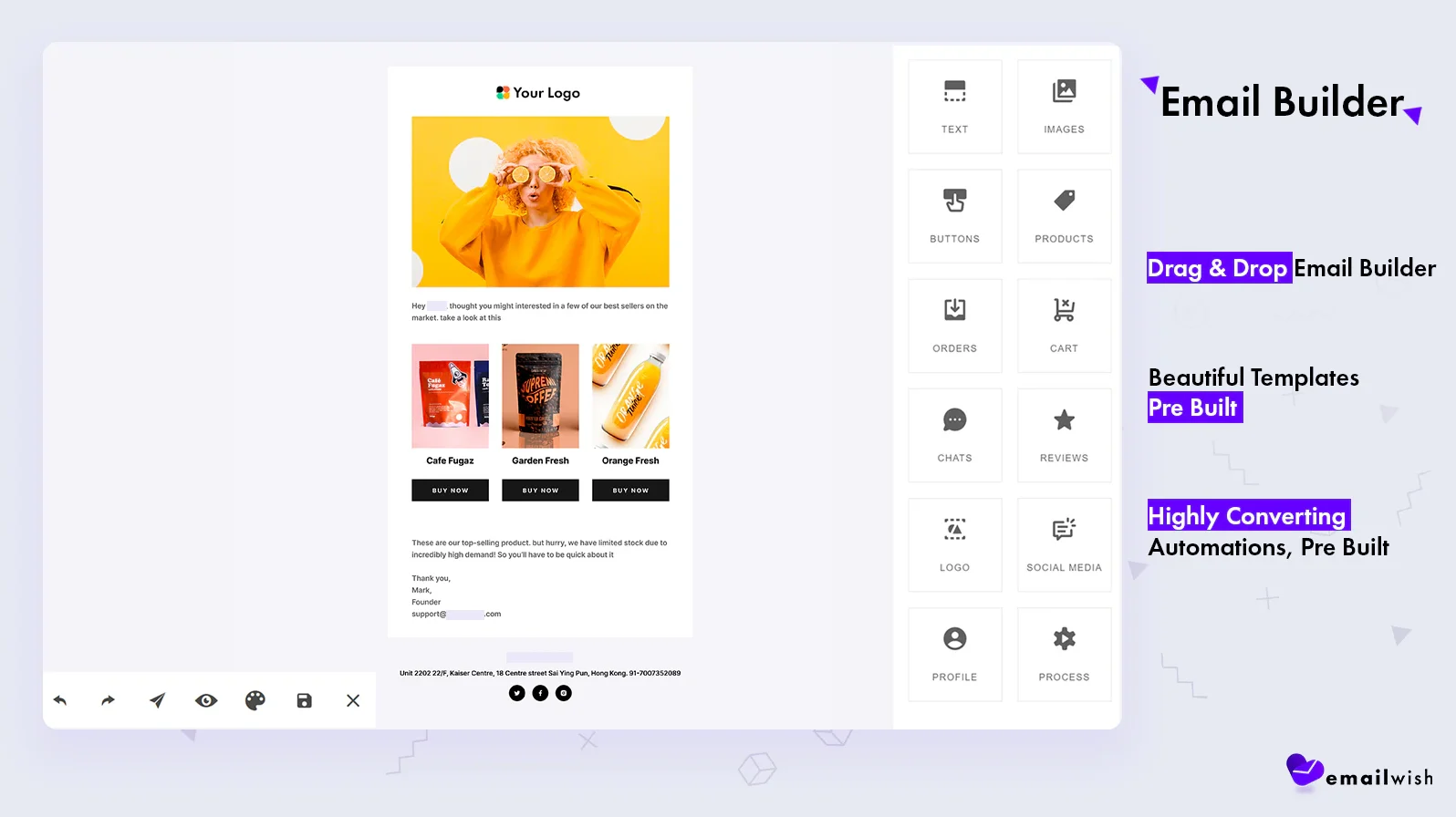
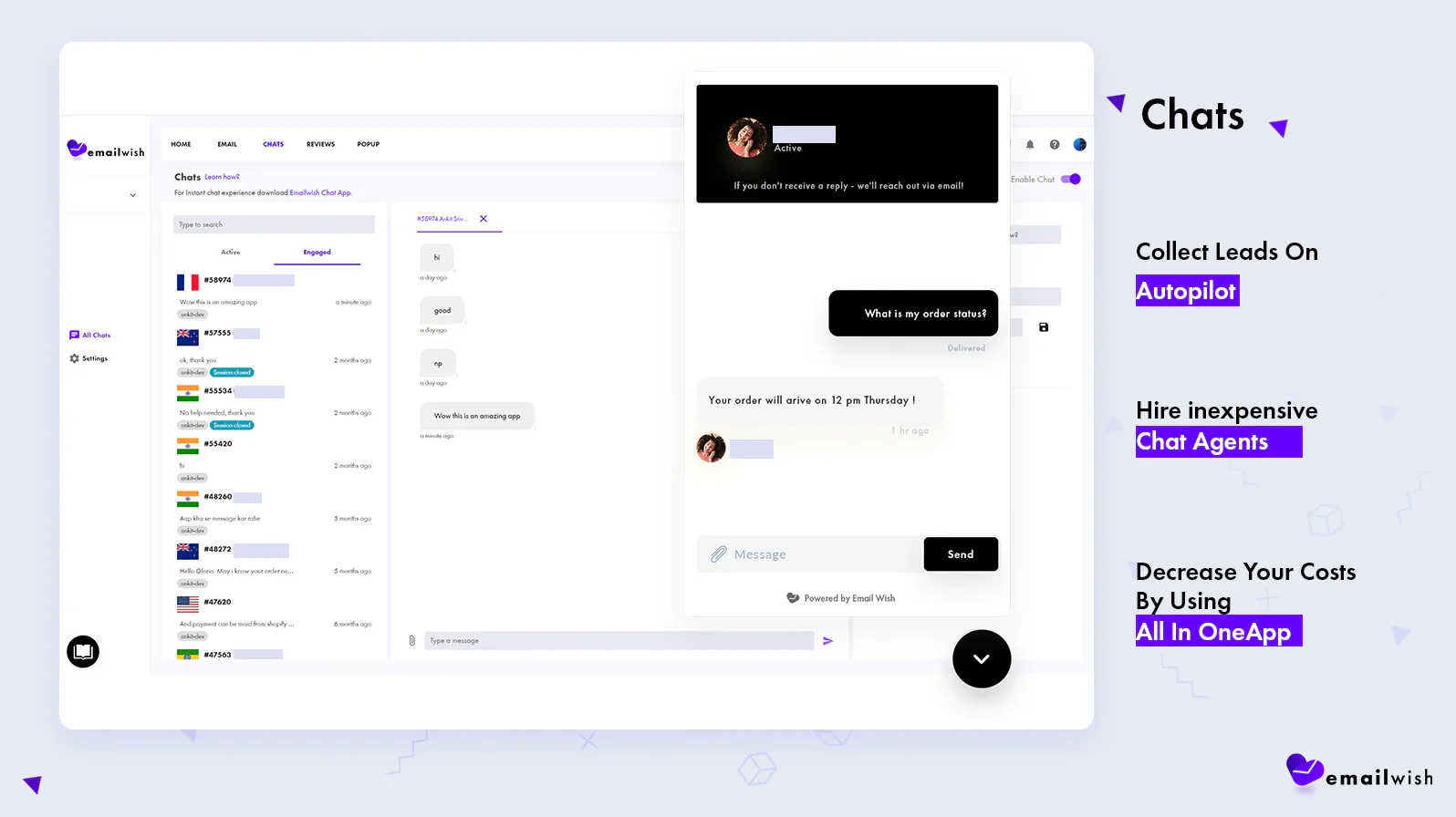
Emailwish is built for four things: richer customer data to target with, strong deliverability, flows that are built for you, and pricing that stays lower as your list grows. A Shopify merchant shouldn’t have to spend days building flows before email starts making money, so instead of starting you on a blank editor, Emailwish starts with your brand.
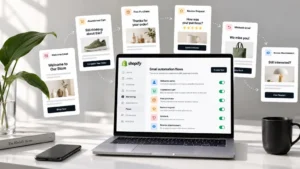
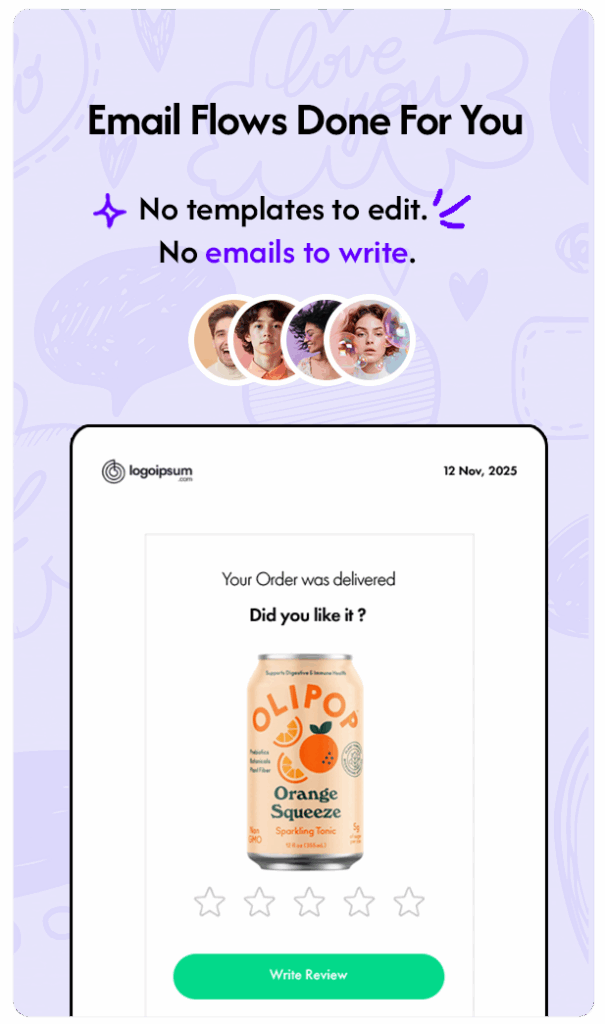
How setup works. When you install Emailwish, it pulls your store name, logo, social links, products and brand details straight from Shopify. It then builds your email flows automatically, generating the images and writing the email copy in your brand’s voice. The only choice you make at signup is your header and footer style. After that, about 10 ecommerce email flows are live, including welcome, abandoned cart, review request, after-review, form signup and chat follow-up. You keep full control and can edit any email, flow or segment whenever you like.
Deeper targeting, built in. Most email apps only know what Shopify tells them: orders, carts and email opens. Emailwish runs its own Shopify chat app, reviews app, popup app and wishlist app under the hood, and every one of them writes to the same customer profile as your email. That gives you signals other tools never see, and you can target on them directly. For example, you can email a shopper who asked about sizing in chat but didn’t buy, send a recovery offer to a VIP who left a 2-star review, remind someone when a wishlisted item drops in price or comes back in stock, or tailor a welcome series to the answer a visitor gave in a popup. Because it’s all native, there are no integrations to connect and nothing falls out of sync.
What we liked
- Lower pricing: 5,000 contacts and 10,000 emails for $35/month on Launch
- Deliverability is a core focus (our independent GMass inbox-placement results are coming soon)
- The fastest setup on this list: flows, copy and images are created for you from your store data
- About 10 prebuilt Shopify flows ready on day one
- Deeper targeting: segment and trigger flows on chat conversations, review ratings, popup answers and wishlist activity, not just orders and email engagement
- Chat, reviews, popups, wishlists and stock alerts run natively on one customer profile, so that data is always in sync
- Real-time sync of Shopify orders, products, browsing and checkout events
- Revenue reporting for flows and campaigns
- Live chat and email support on every plan, including Free
- GDPR-ready consent handling and double opt-in
- Works with Shopify and WooCommerce
Where it could improve
- No SMS yet
- A/B testing is still listed as “coming soon”
- A young app with only a handful of Shopify App Store reviews so far (4.1 from 7)
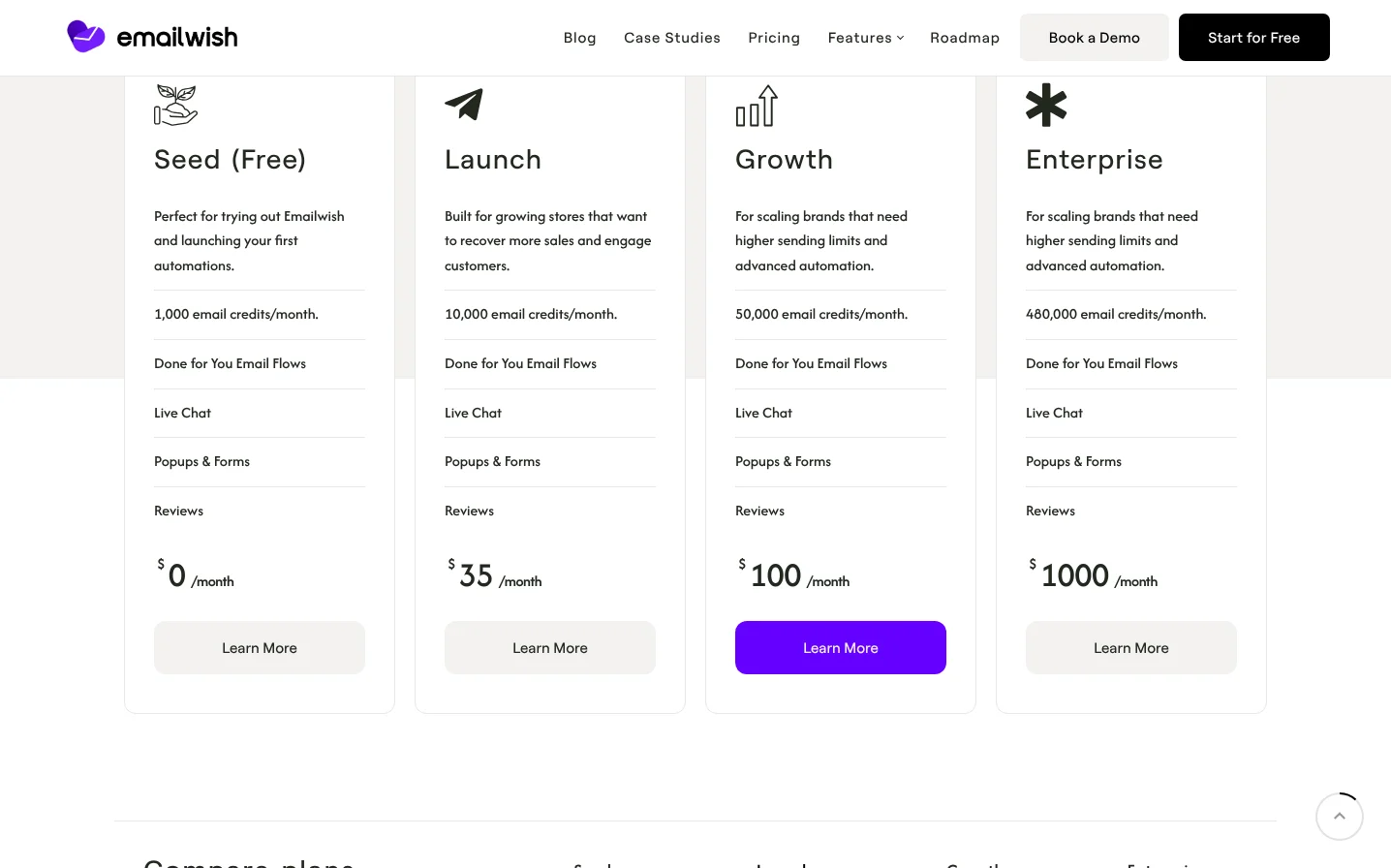
Pricing:
- Seed: Free, with 100 contacts and 1,000 emails a month
- Launch: $35/month, with 5,000 contacts and 10,000 emails
- Growth: $100/month, with 50,000 emails
- Enterprise: $1,000/month, with 480,000 emails
Who it’s for: small and growing Shopify stores that want working automations this week, and want to target customers on more than their order history.
2. Klaviyo
Best for agencies managing Shopify clients
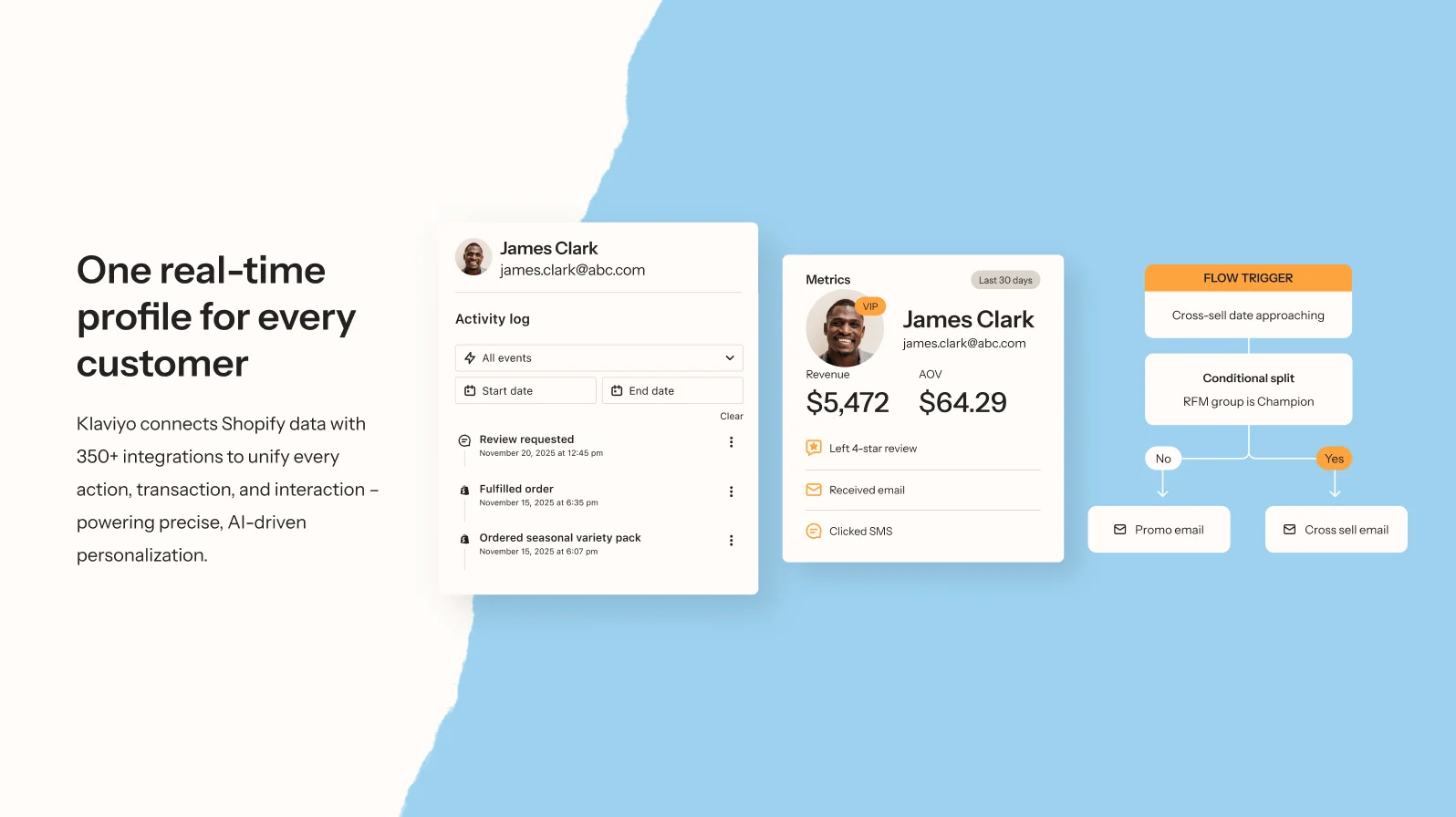
Klaviyo grew largely through agencies, and it shows. It’s built for teams that manage email for clients, with extensive dashboards, benchmarks and reports that make it easy to present results. It syncs Shopify tags, catalogue and coupons, and adds predictive analytics and product recommendations. The trade-off is effort. Klaviyo gives you powerful building blocks, but you, or an agency, build the flows, write the emails and design the templates yourself.
What we liked
- Detailed reporting and benchmarks that agencies can share with clients
- Predictive analytics, send-time optimisation and multi-channel A/B testing
- 160+ campaign templates
- Email and SMS in one platform
Where it could improve
- The learning curve is steep for a small team without a dedicated marketer
- Cost climbs quickly as your list grows
- Reviews, chat and wishlists need separate apps, so targeting on that behaviour depends on third-party integrations
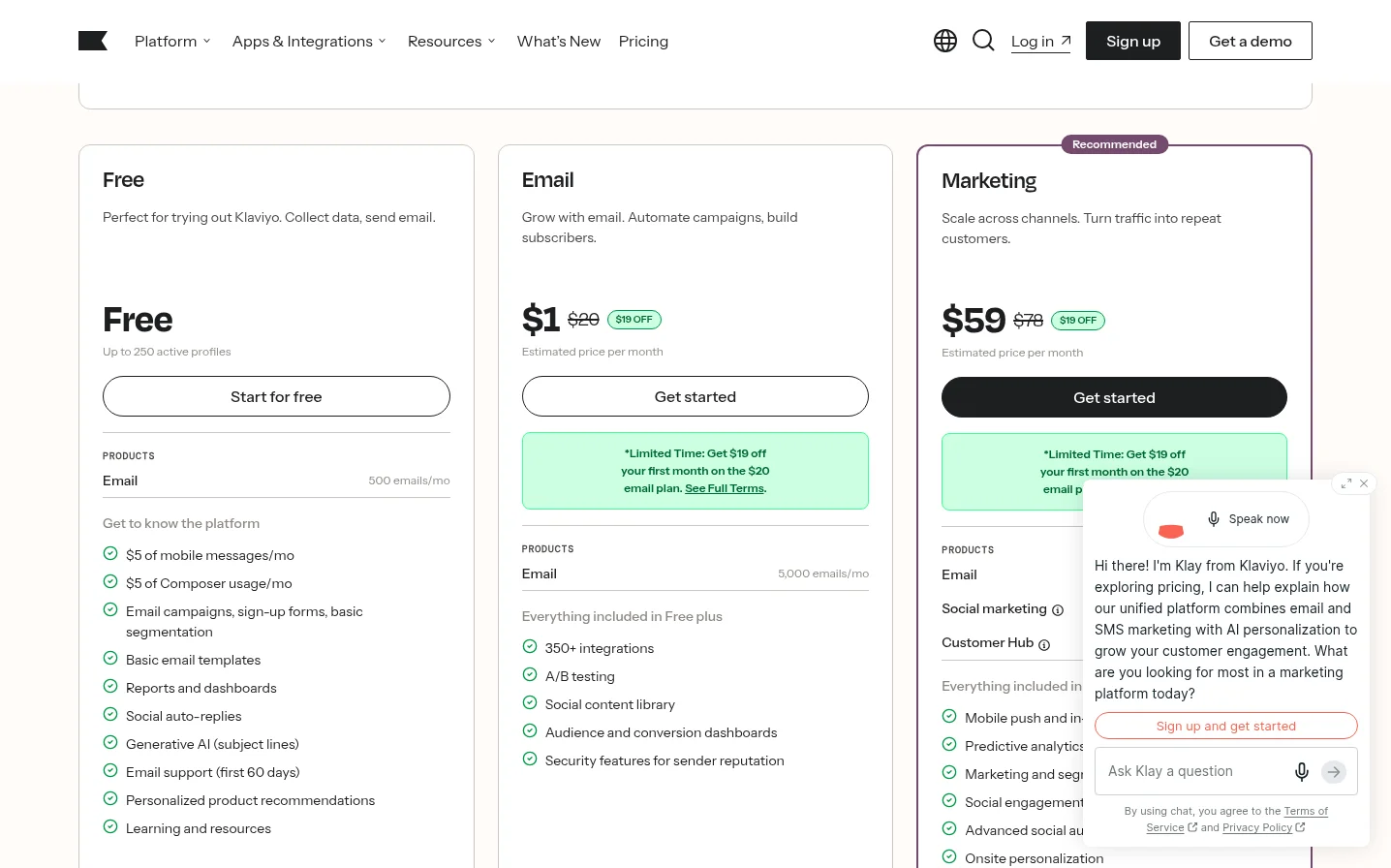
Pricing: free for up to 250 contacts. Email starts at $20/month for 251 to 500 contacts, and SMS starts at $15/month for 1,250 credits.
Who it’s for: agencies managing Shopify clients, and brands that already pay an agency to run email.
See how it compares: Klaviyo vs Emailwish.
3. Omnisend
Best for email and SMS on a budget
Omnisend was built for ecommerce and combines email, SMS, web push and popups. It comes with prebuilt workflows and more than 250 templates, and it offers 24/7 live support even on the free plan.
What we liked
- Prebuilt ecommerce automations and 250+ templates
- SMS at a low per-message price, from $0.007
- 24/7 live support on every plan
- Popups and signup forms included
Where it could improve
- The free plan is small: 250 contacts and 500 emails a month
- Reviews, chat and wishlists still need other apps, which limits targeting on that behaviour
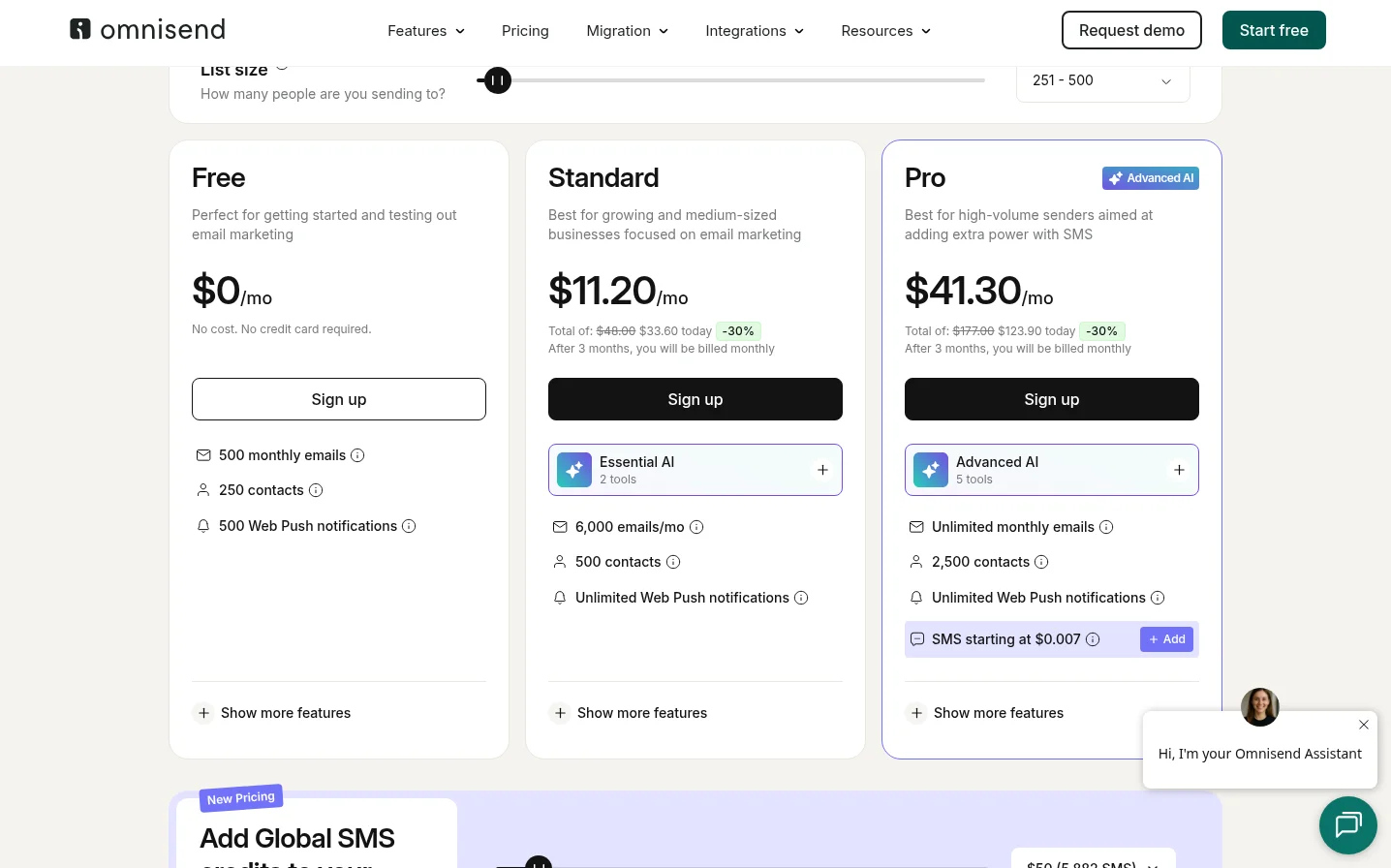
Pricing: free for 250 contacts. Standard is $16/month for up to 500 contacts and 6,000 emails. Pro is $59/month for up to 2,500 contacts and unlimited emails.
Who it’s for: stores that want email and SMS together without Klaviyo’s price tag.
4. Shopify Email Marketing
Best for brand-new stores
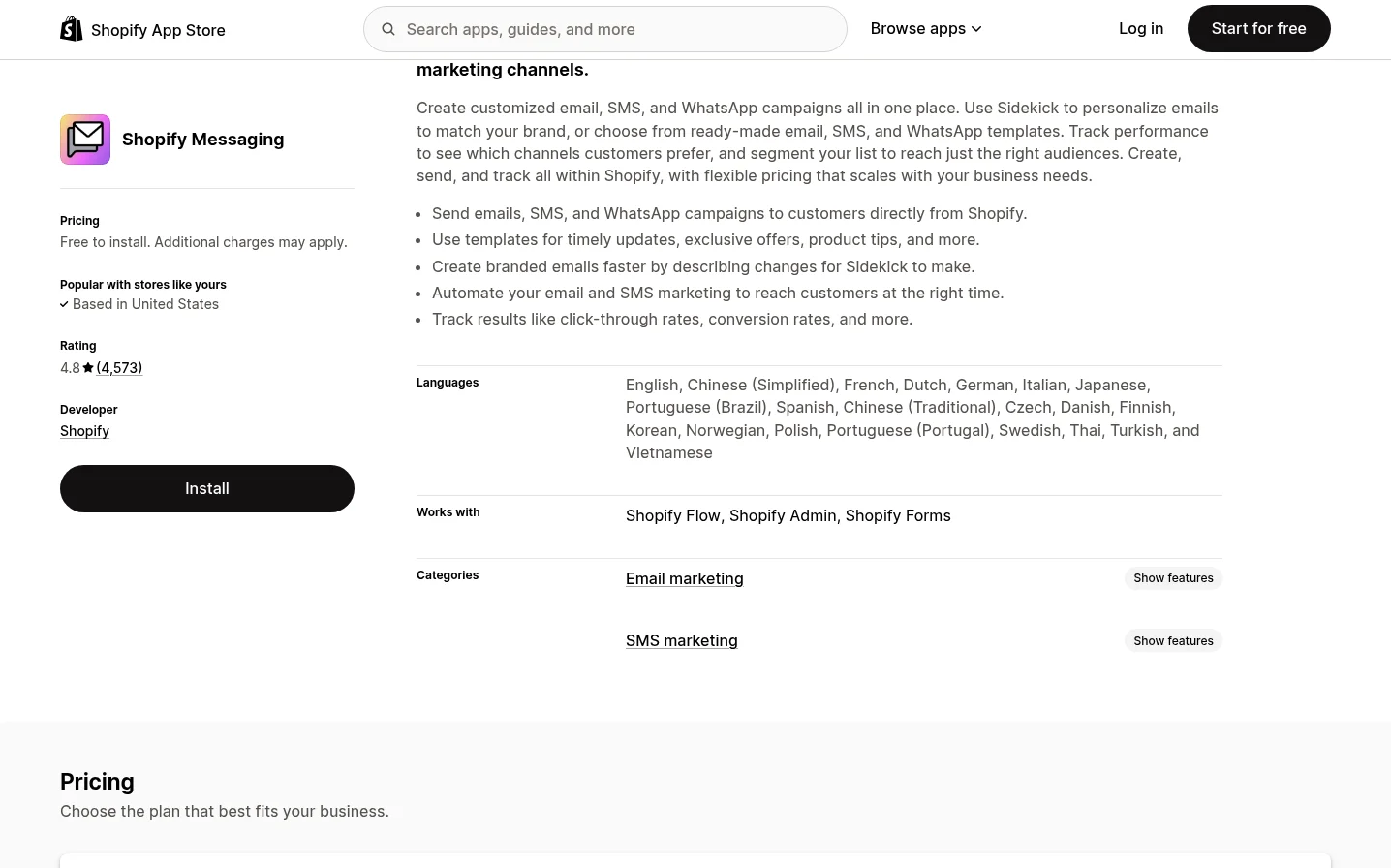
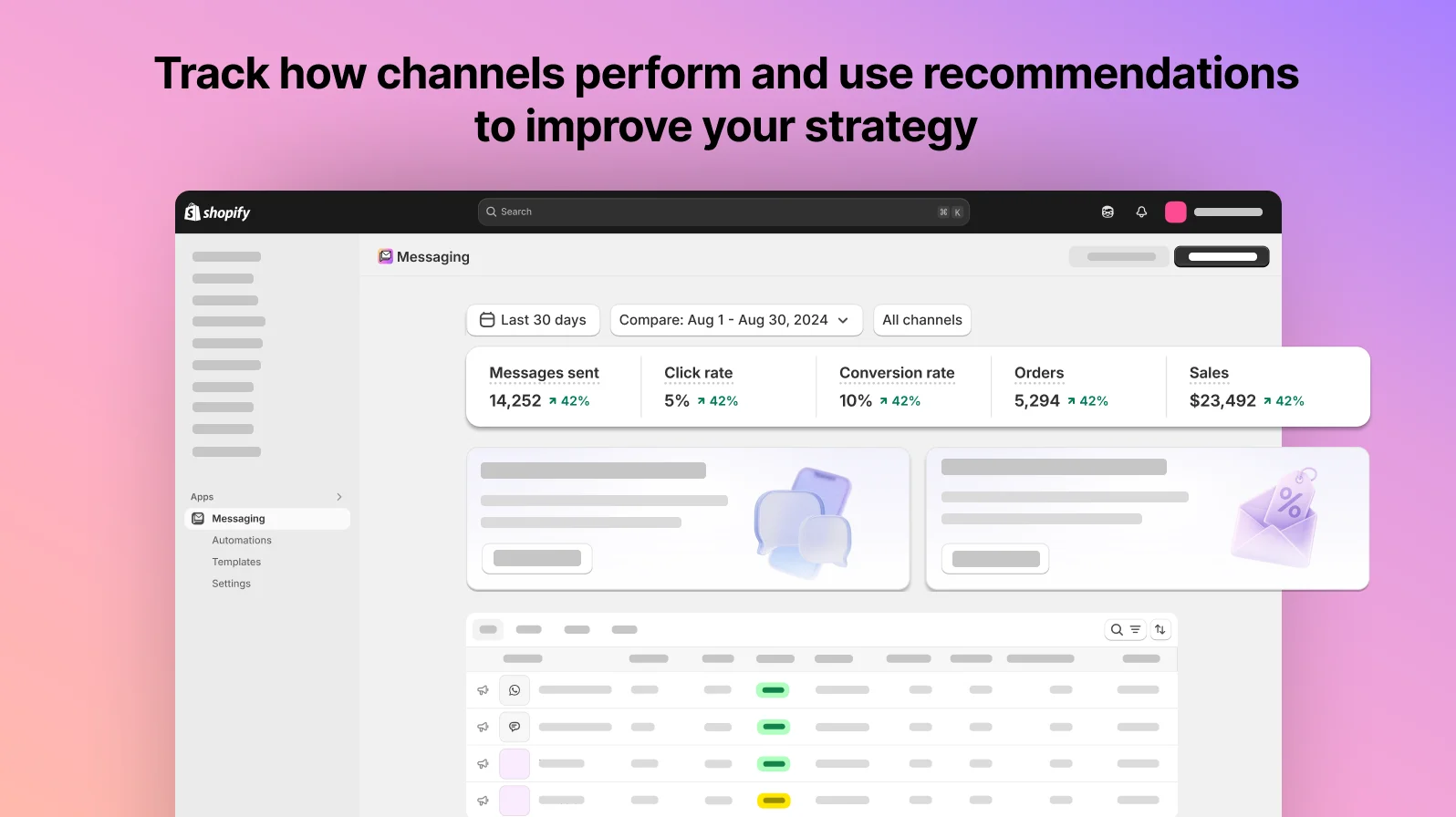
Shopify Email Marketing, Shopify’s own email app, is the simplest way to start. It lives inside your Shopify admin, uses your products directly, and includes basic Shopify email automation, such as welcome and abandoned cart flows.
What we liked
- Your first 10,000 emails each month are free
- Nothing extra to connect, because it’s built into Shopify
- Easy for non-technical users
Where it could improve
- Automation and segmentation are basic compared with dedicated tools
- Limited reporting and personalisation
- No SMS, chat or reviews, so targeting is limited to Shopify order and email data
Pricing: the first 10,000 emails a month are free, then from $1 per 1,000 emails.
Who it’s for: new stores sending a few campaigns a month.
5. Mailchimp
Best for newsletters
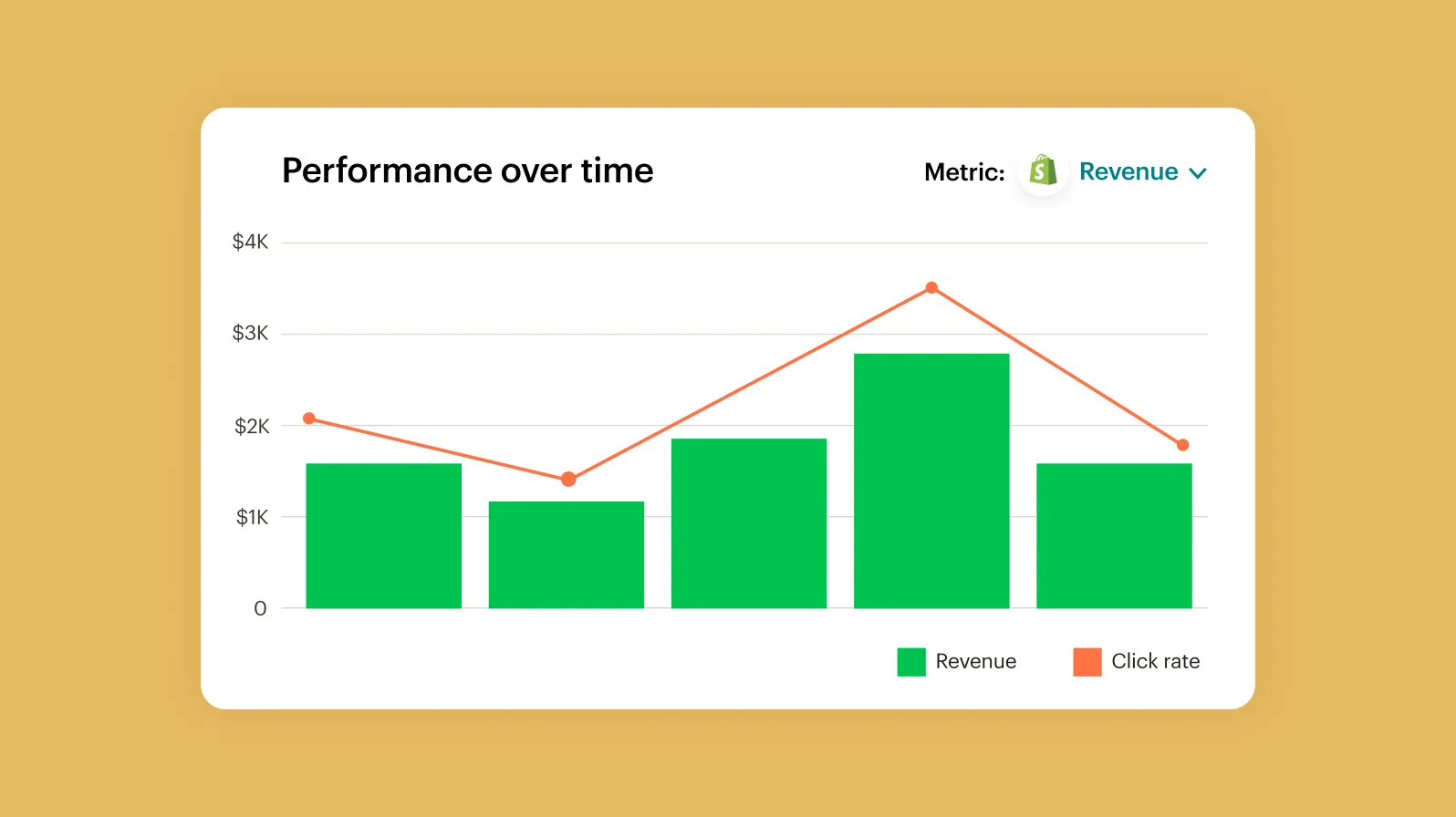
Mailchimp is the best-known name in email and good for newsletters, landing pages and general marketing. On lower plans, its ecommerce automation is more limited than tools built specifically for Shopify.
What we liked
- Familiar, polished editor and a large template library
- A free plan with a CRM, forms, landing pages and surveys
- 24/7 email and chat support from Essentials upwards
Where it could improve
- Essentials allows only up to 4 automations
- Advanced email segmentation is kept for the $350/month Premium plan
- SMS is a paid add-on
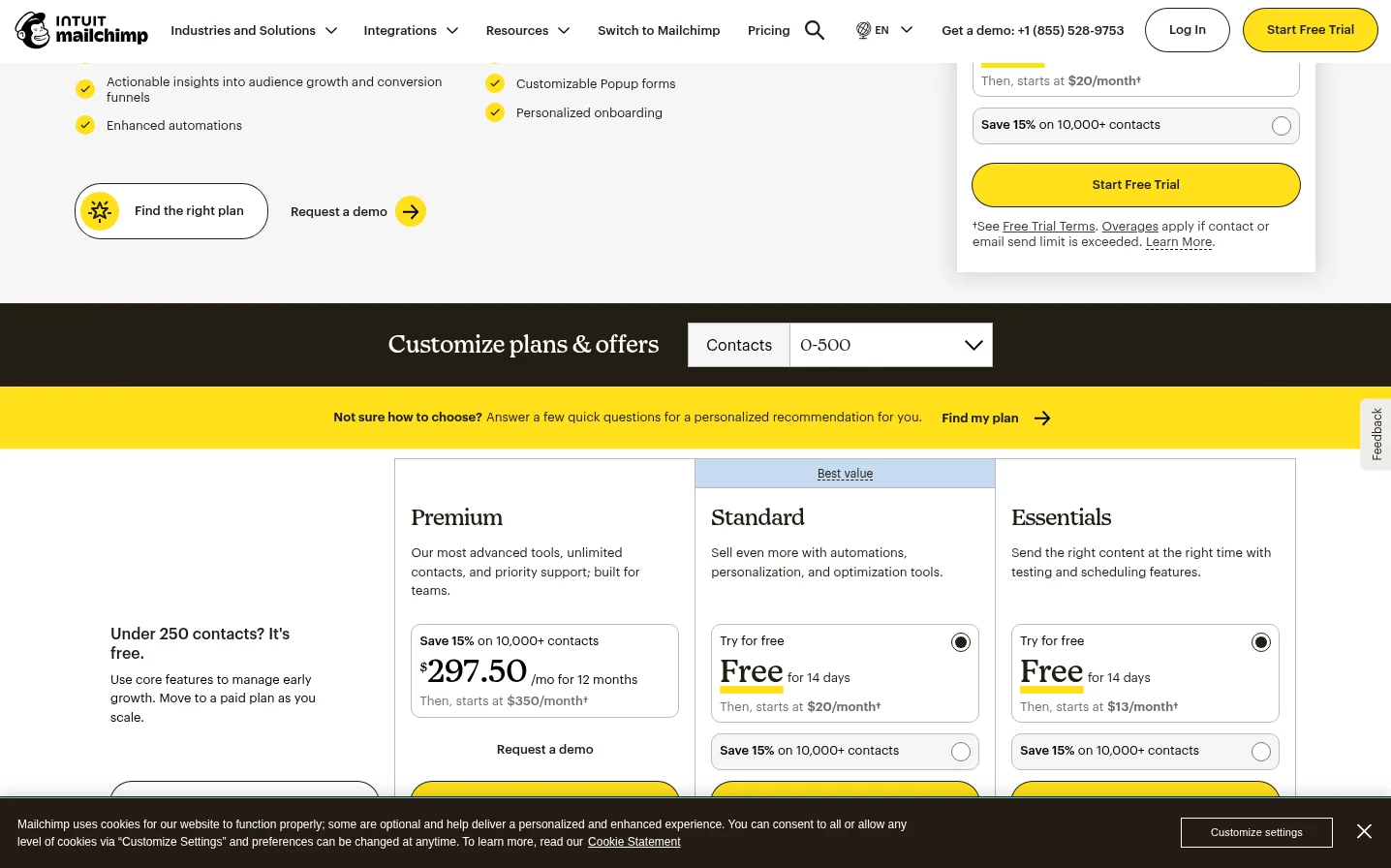
Pricing: there’s a free plan. Essentials starts at $13/month, Standard at $20/month and Premium at $350/month, all priced by contact count.
Who it’s for: stores that mostly send newsletters rather than automated flows.
6. Privy
Best for popups and list growth
Privy started as a popup tool and added email and SMS later. Its strongest area is still capturing subscribers, with spin-to-win, multi-step forms and targeted displays.
What we liked
- Excellent popups with advanced targeting
- Revenue and engagement reporting
- Unlimited email sends on the email plans
Where it could improve
- No free plan
- Email automation is less deep than the specialist tools, and there’s no native chat, reviews or wishlist data to target on
- Popups, email and SMS are priced as separate tiers
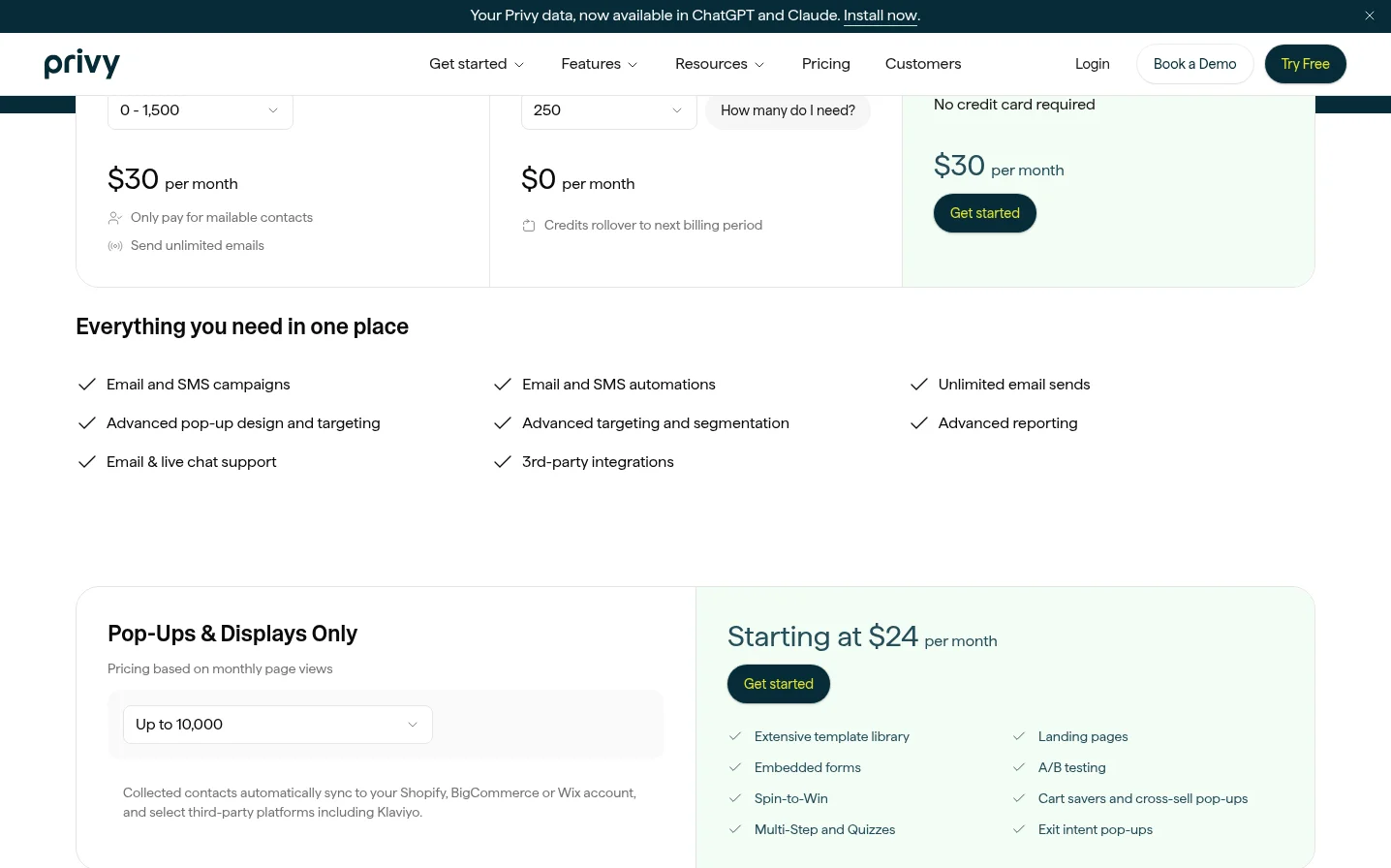
Pricing: Pop Ups starts at $24/month for 10,000 pageviews, Email is $30/month for 1,500 contacts, and Email and SMS is $45/month.
Who it’s for: stores whose main problem is growing their list.
7. Brevo (formerly Sendinblue)
Best for low-cost sending
Brevo prices by how many emails you send rather than how many contacts you have, which is good value if you have a large list but email it rarely. It also handles transactional email and SMS.
What we liked
- A generous free plan: 300 emails a day
- Low starting price
- Marketing and transactional email in one place
Where it could improve
- The daily sending cap on the free plan
- Shopify automations are less ecommerce-focused than Klaviyo’s or Omnisend’s
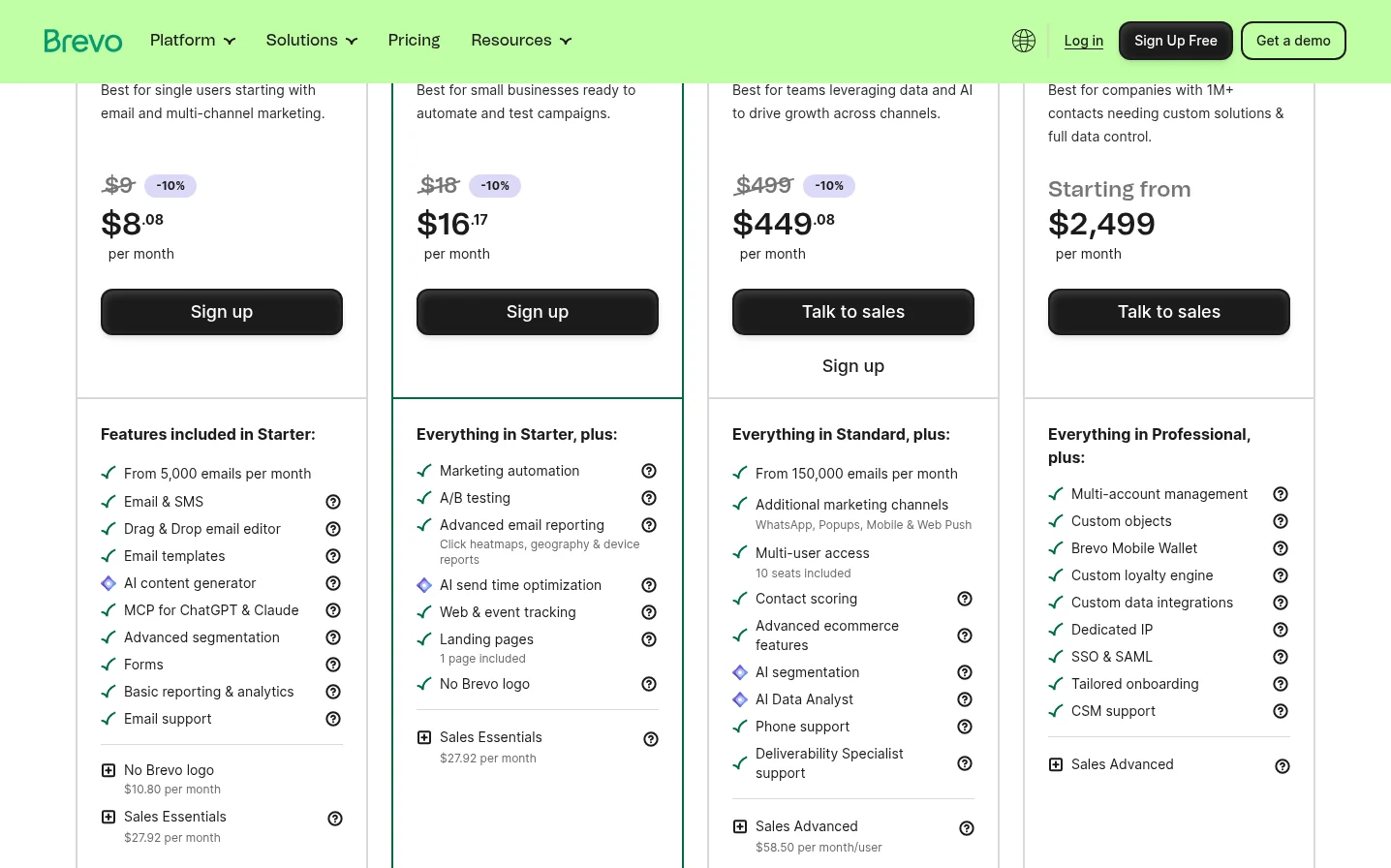
Pricing: free for 300 emails a day. Starter begins at $9/month for 5,000 emails.
Who it’s for: stores with large, low-frequency lists.
8. ActiveCampaign
Best for advanced automation
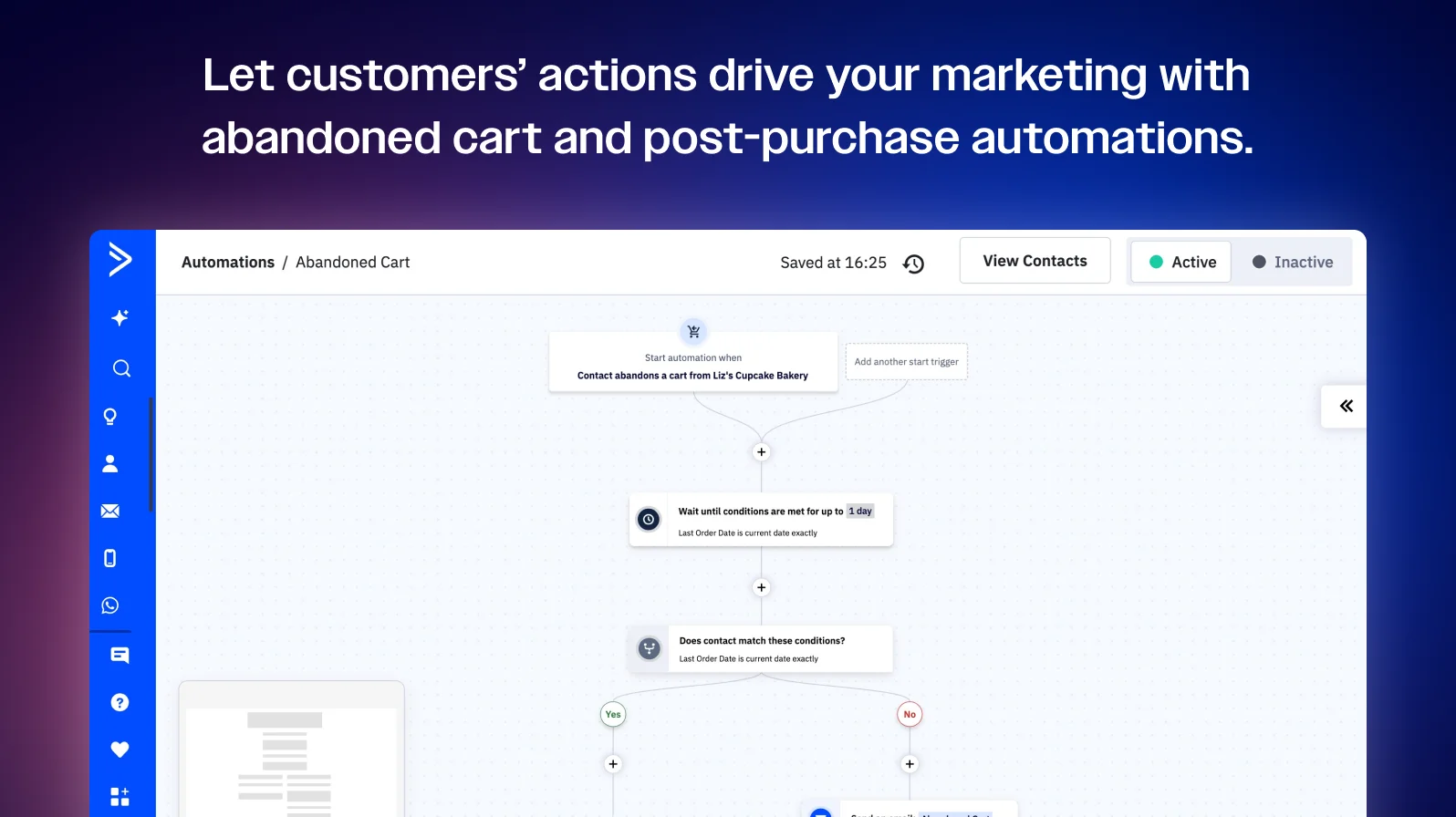
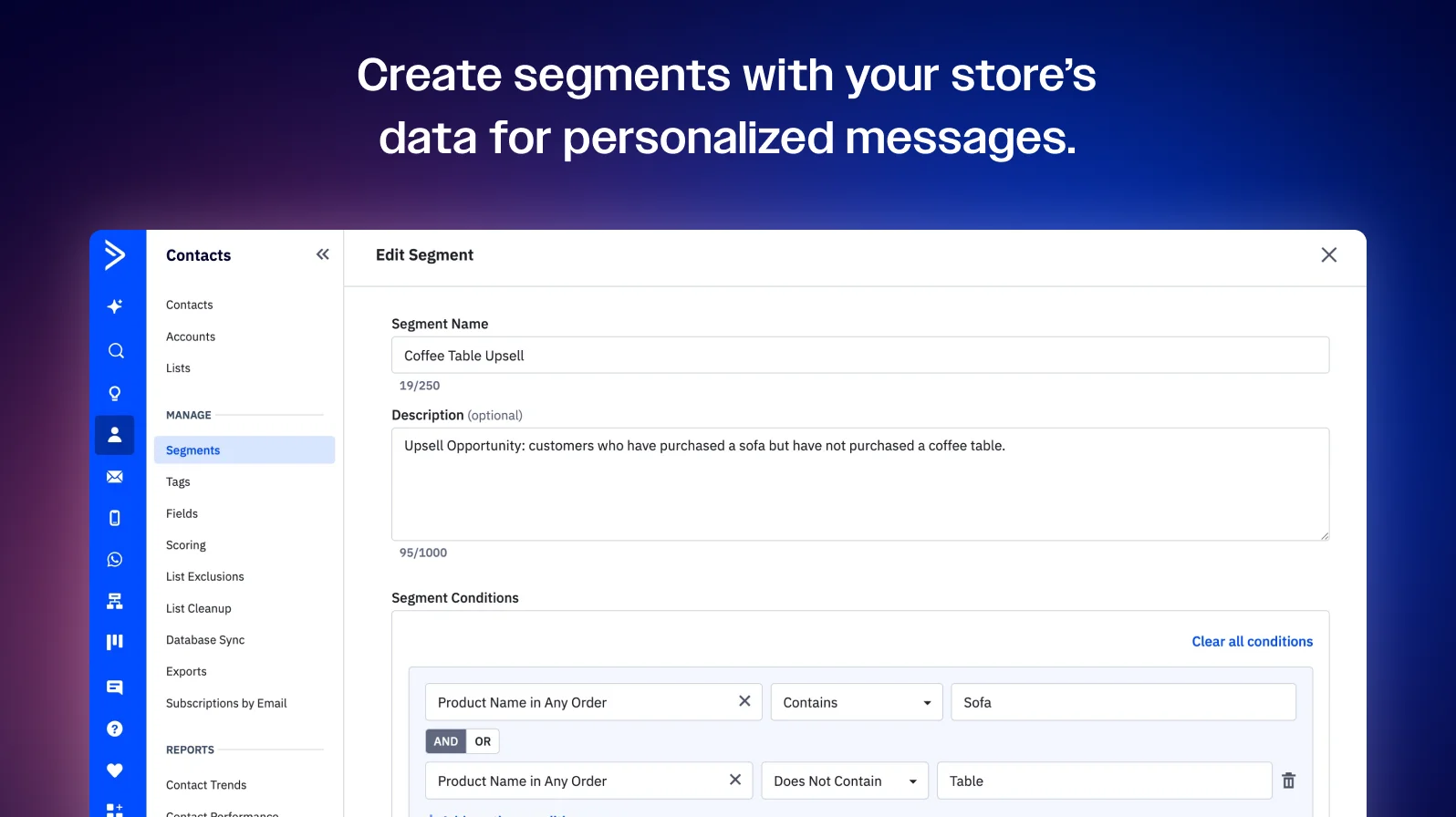
ActiveCampaign combines marketing automation software and a CRM, with a Shopify integration. Its multi-step automation builder is one of the most flexible available.
What we liked
- A powerful multi-step automation builder
- A built-in CRM and site tracking
- Revenue reporting and an ecommerce dashboard from Plus upwards
Where it could improve
- No free plan
- Ecommerce features like product catalogue blocks and revenue reports need Plus, which is $59/month
- Takes time to set up well
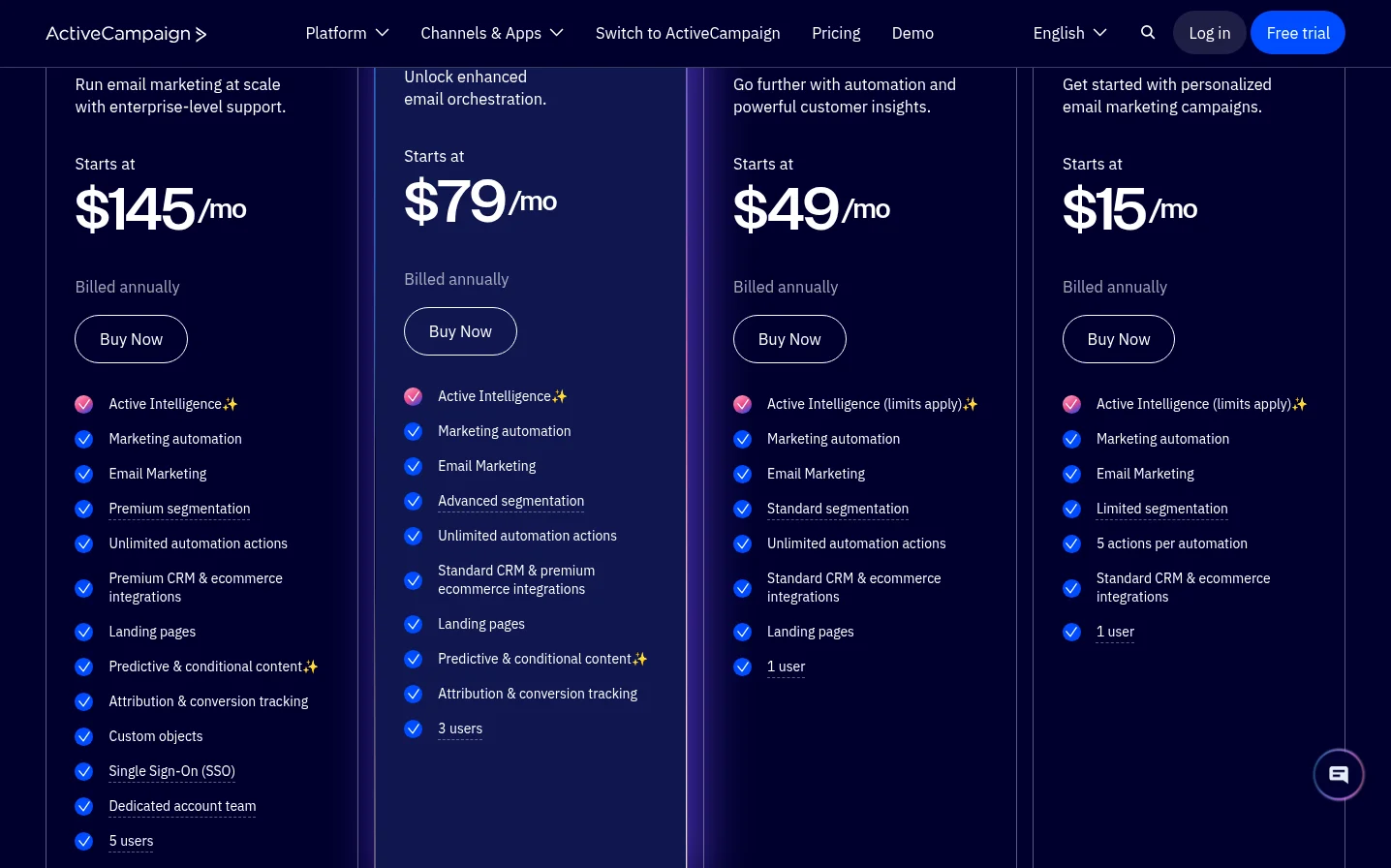
Pricing: Starter is $19/month, Plus $59/month, Pro $89/month and Enterprise $159/month. There’s a 14-day free trial.
Who it’s for: stores that also run B2B or sales pipelines.
9. Drip
Best for ecommerce-only automation
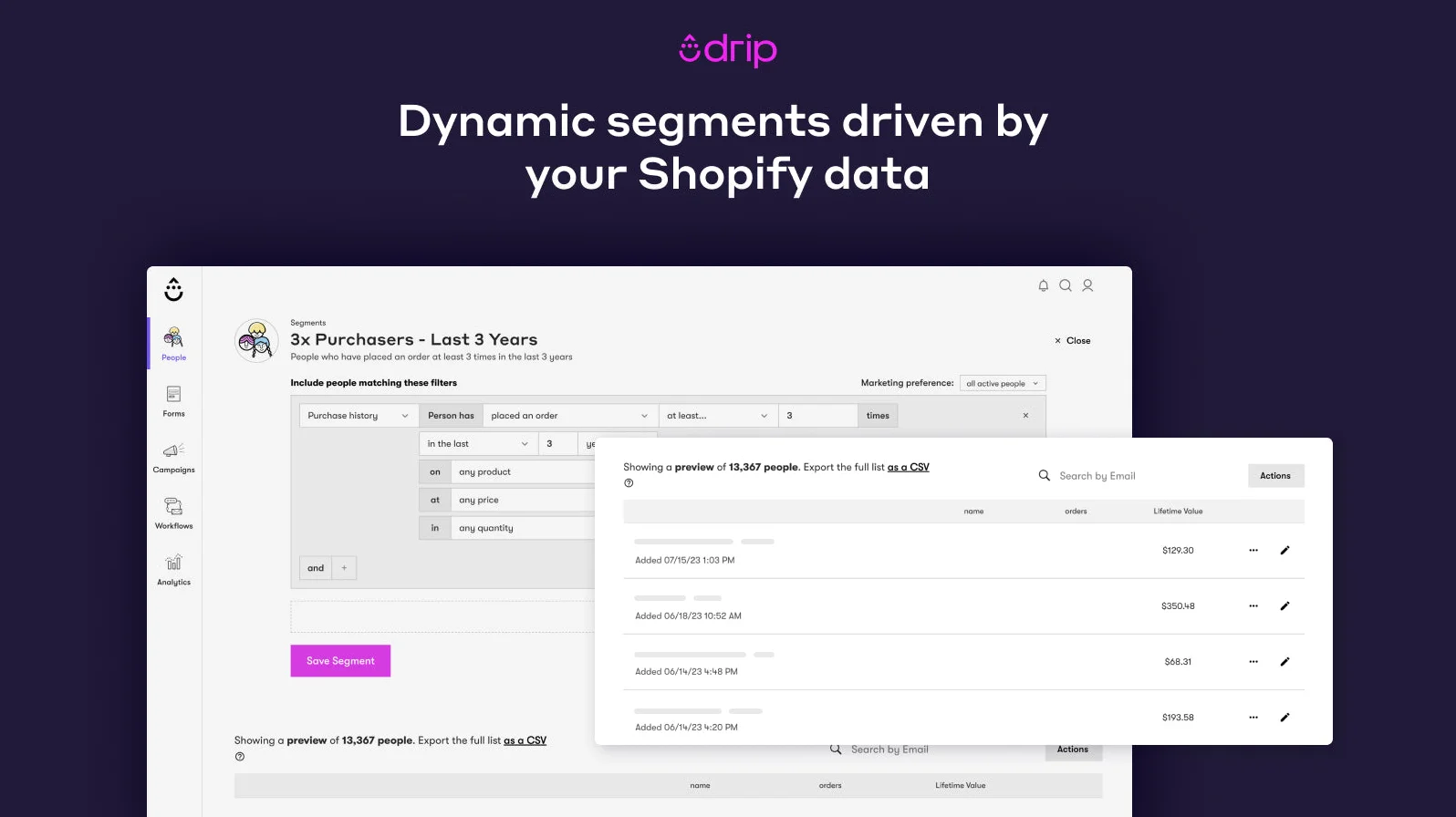
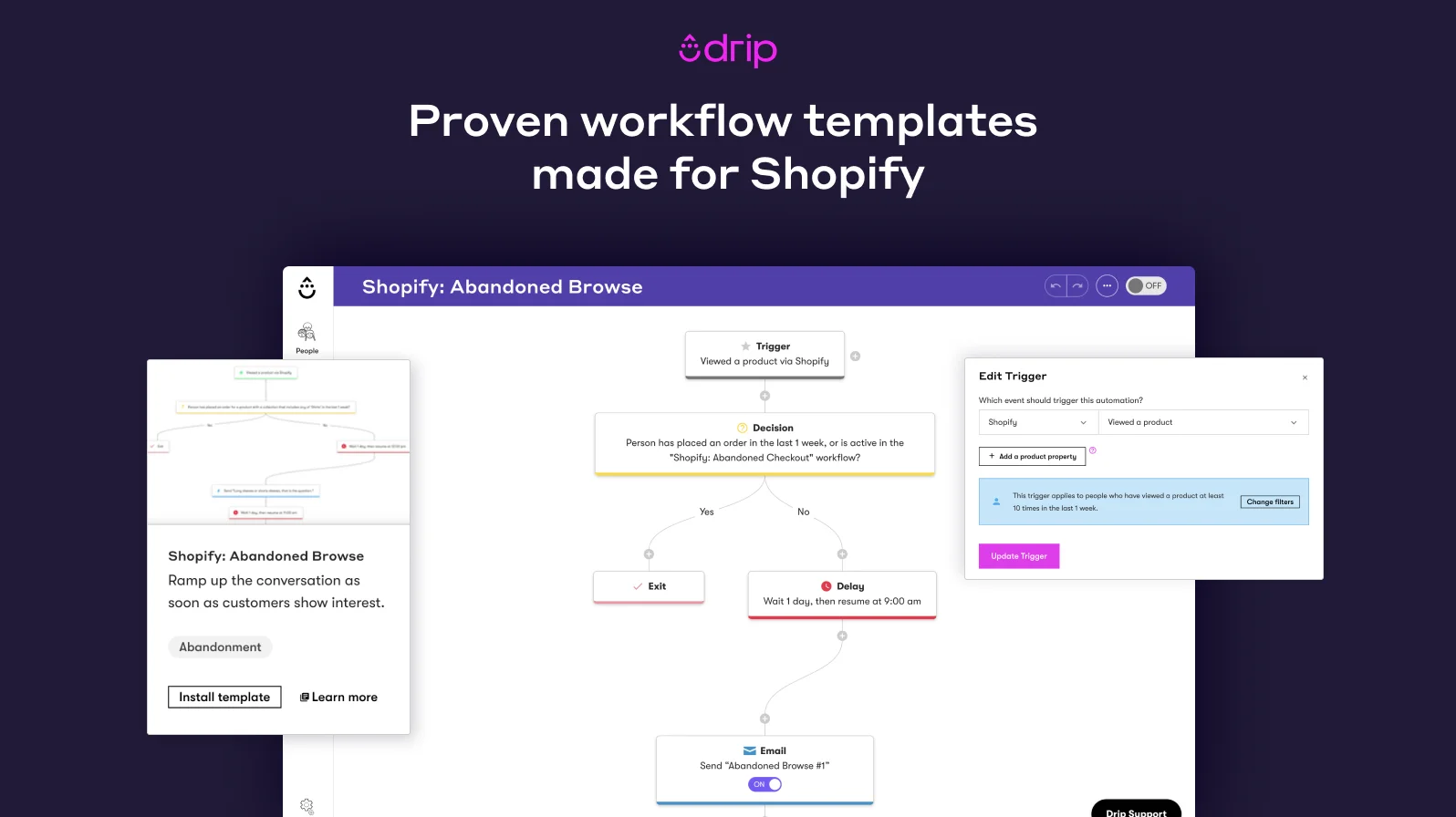
Drip focuses only on ecommerce, with Shopify-specific templates, segmentation based on Shopify customer data, and onsite popups.
What we liked
- Templates designed specifically for Shopify
- A/B split testing inside workflows
- Unlimited users
Where it could improve
- No free plan, and it starts at $39/month
- A smaller review base on the App Store: 4.5 from 55
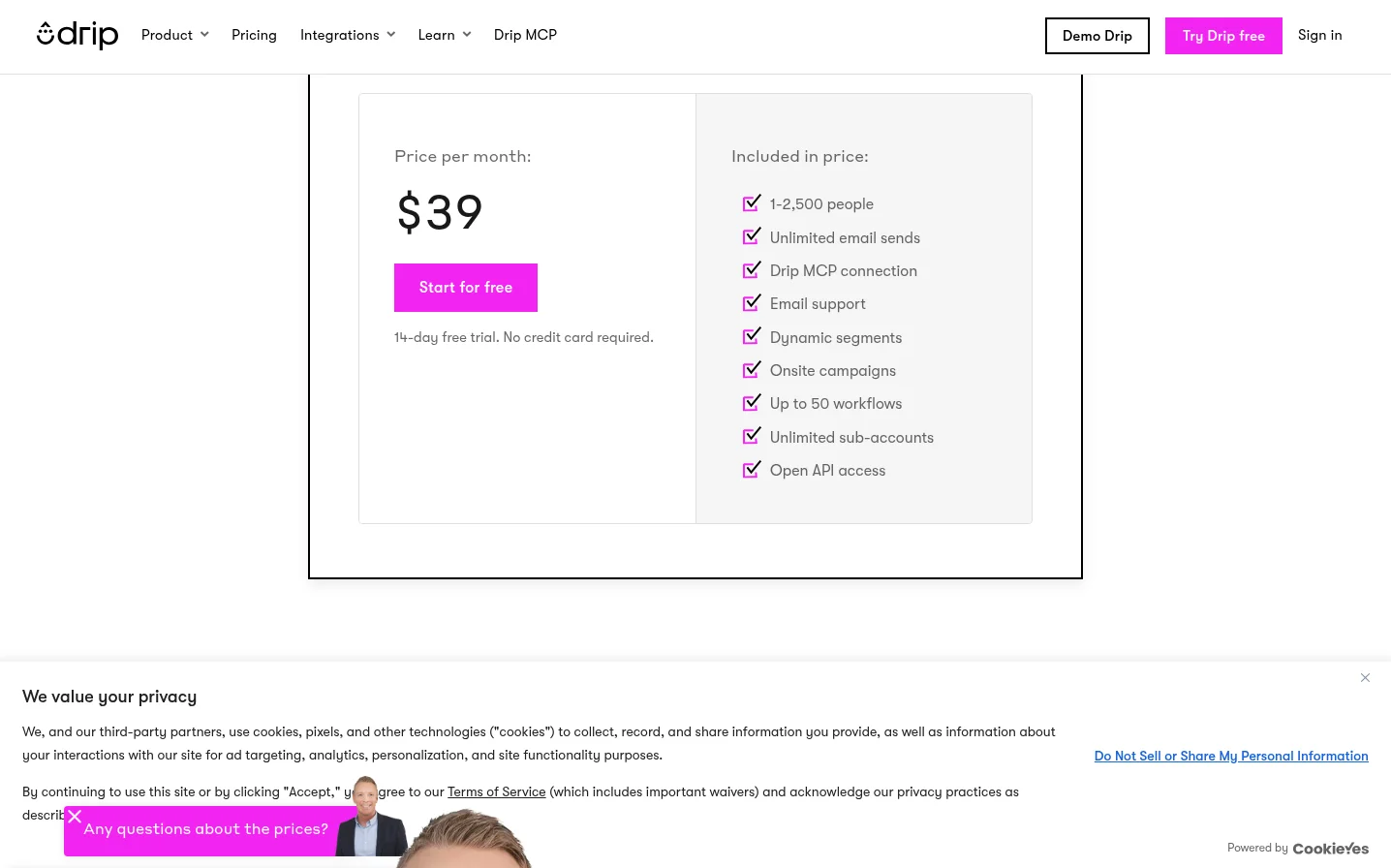
Pricing: from $39/month, rising with list size and send volume. There’s a 14-day free trial.
Who it’s for: stores that have outgrown basic tools and want ecommerce-only features.
10. Kit (formerly ConvertKit)
Best for creators
Kit is built for creators, including authors, artists and course sellers, who sell products on Shopify on the side.
What we liked
- A free plan for up to 10,000 subscribers
- Free migrations from other tools
- Simple tagging and segmentation
Where it could improve
- Not ecommerce-first, so Shopify flows are lighter
- Paid plans are pricey for small lists
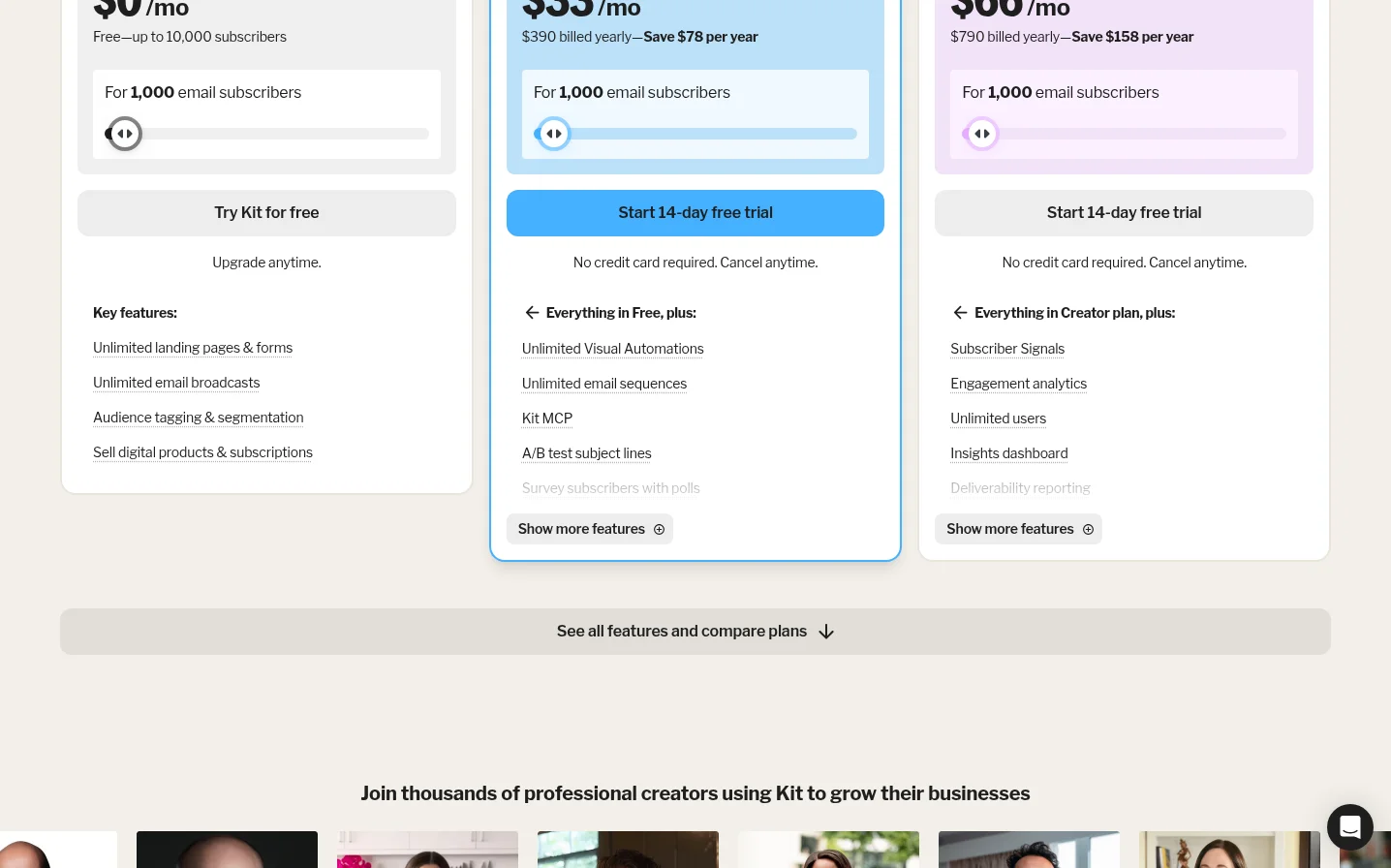
Pricing: free up to 10,000 subscribers. Creator is $33/month and Pro is $66/month, both at 1,000 subscribers.
Who it’s for: creators who sell products alongside content.
11. MailerLite
Best for simple, affordable newsletters
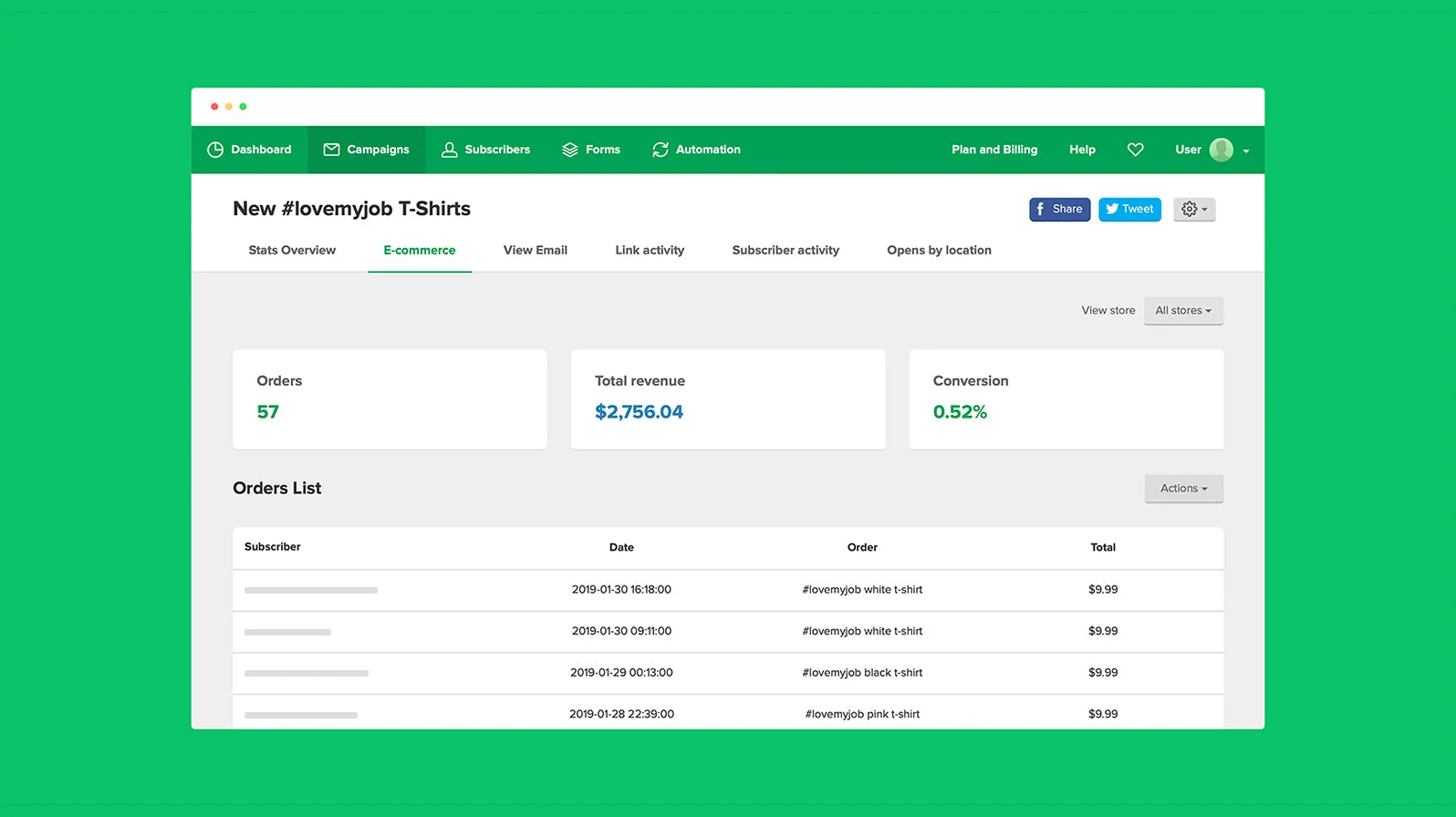
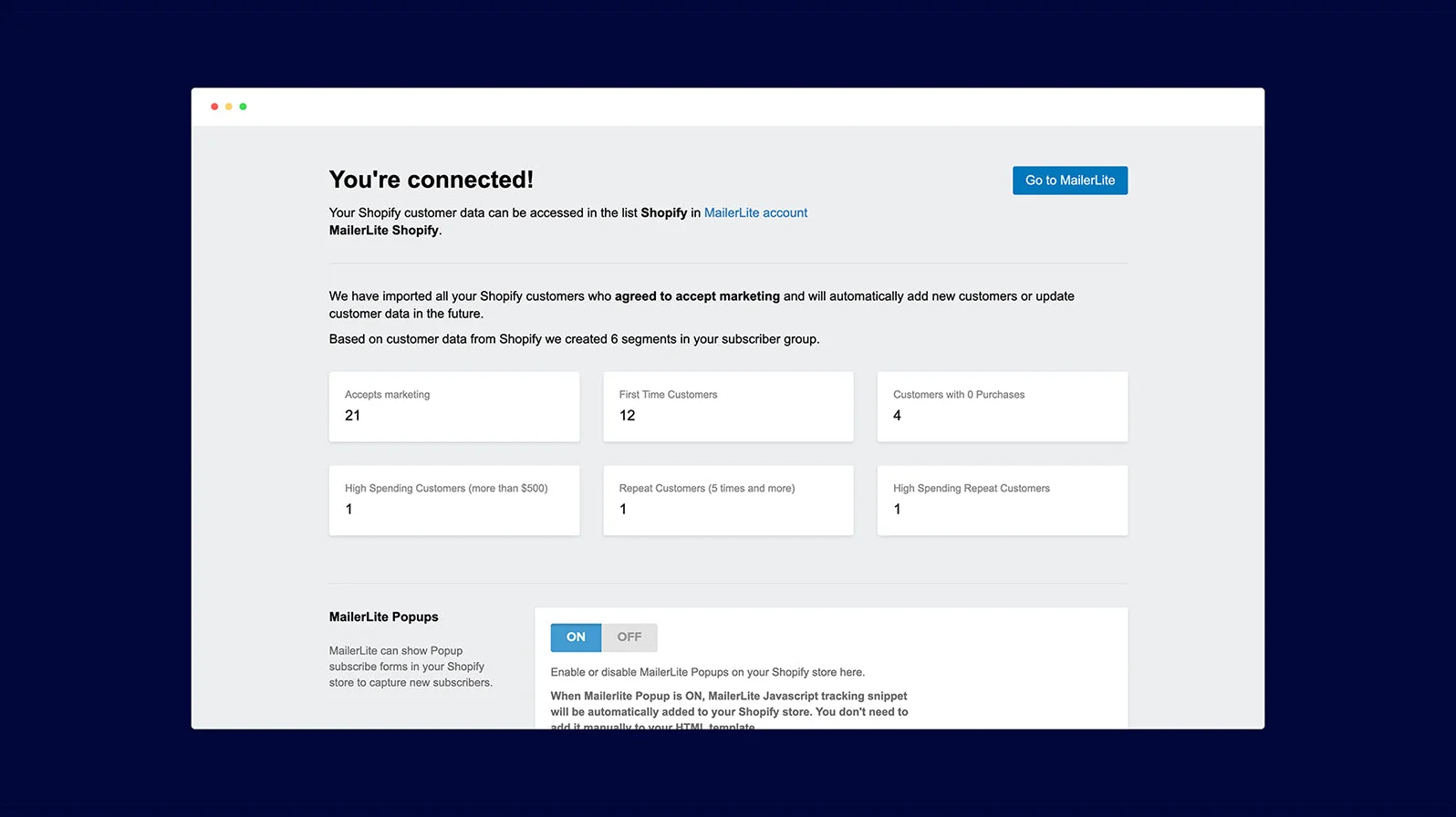
MailerLite is clean, affordable and easy to learn, which makes it a solid choice for newsletters and basic automation.
What we liked
- A clean, beginner-friendly editor
- Low prices
Where it could improve
- The free plan is small: 250 subscribers and 2,500 emails a month
- Ecommerce automation is basic
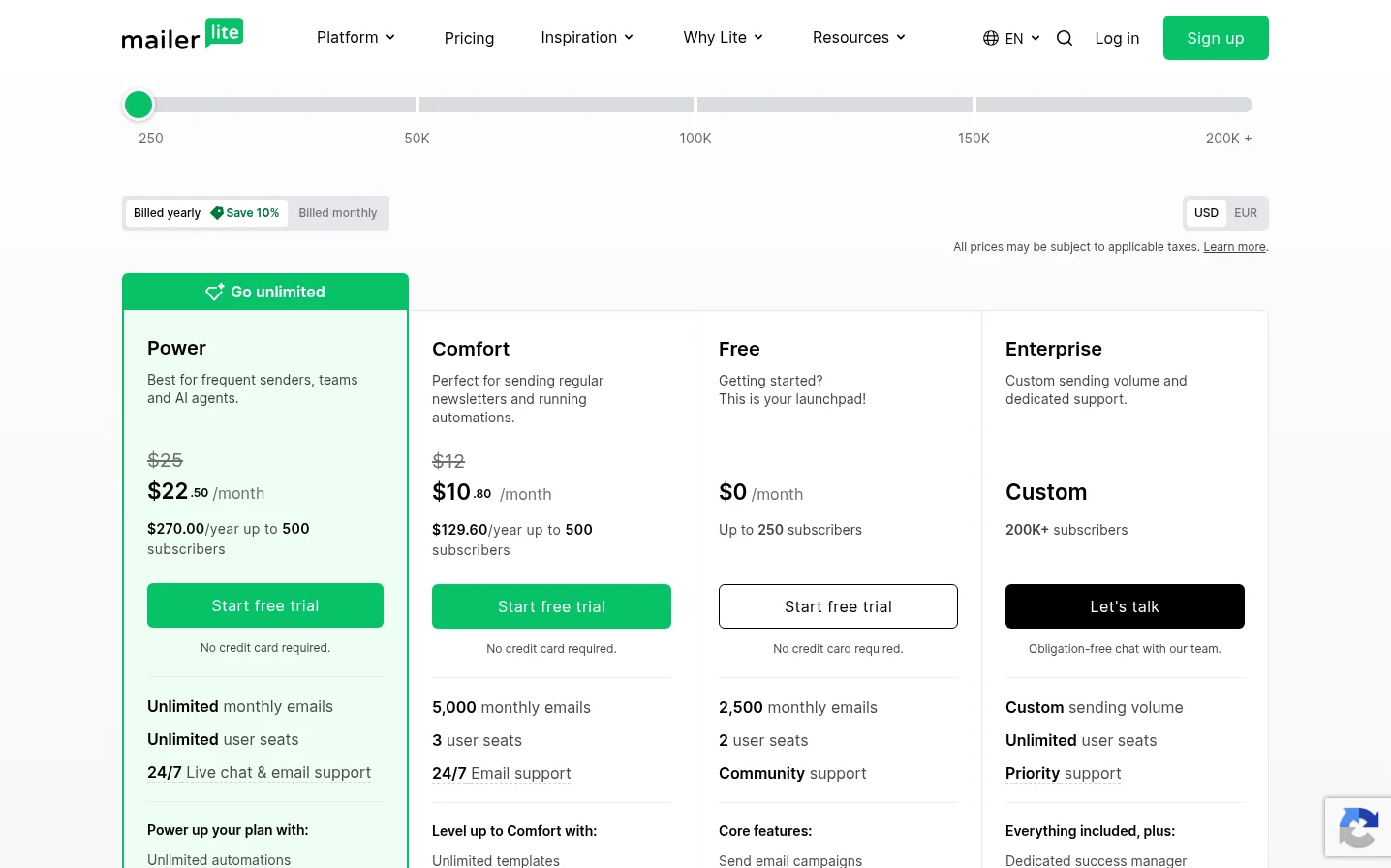
Pricing: free for 250 subscribers. Comfort is $10.80/month and Power is $22.50/month, both for 500 subscribers on yearly billing.
Who it’s for: small stores on a tight budget.
Should you use one app or many?
Most Shopify stores end up with a stack of separate apps for their Shopify store: one for email, one for reviews, one for popups, one for live chat and one for wishlists. Each needs its own subscription and setup, and they only talk to each other through integrations that can break or lag.
The bigger cost of that stack is lost targeting. When chat, reviews and wishlists live in other apps, your email tool sees little or none of that behaviour. Emailwish runs all of them natively on one customer profile, so every chat, review, popup answer and wishlist add can trigger or target an email. If an agency runs your email and reports to you, Klaviyo may still suit that setup. If you’re a small team, fewer apps usually means faster results.
FAQ: email marketing apps for Shopify
1. What is the best email marketing app for Shopify?
It depends on your team. For easy email setup, deeper targeting, higher deliverability and lower pricing, Emailwish. For agencies that need detailed client reporting, Klaviyo. For email and SMS on a budget, Omnisend. For very new stores, Shopify Email Marketing.
2. Is there a free email marketing app for Shopify?
Yes. Emailwish, Klaviyo, Omnisend, Mailchimp, Brevo, Kit and MailerLite all have free plans, and Shopify Email Marketing includes 10,000 free emails a month. Free plans differ a lot in contact limits and automation features, so check the table above.
3. Does Shopify have its own email marketing?
Yes. Shopify Email Marketing is built into Shopify. It’s good for simple campaigns, but its automation and segmentation are basic compared with dedicated apps.
4. Which Shopify email flows should I set up first?
Start with a welcome series, an abandoned cart flow and a post-purchase or review request flow. These three usually drive most of the revenue from email automation. Emailwish sets them up for you automatically, and you can see how each one works in our email flow resource.
5. Can I target customers based on chats, reviews or wishlists?
With most email tools, only if you connect separate apps, and even then the data is often limited or delayed. Emailwish runs live chat, reviews, popups and wishlists natively, so you can segment and trigger flows on all of that behaviour out of the box.
6. Which Shopify email app has the best deliverability?
We’re running an identical GMass inbox-placement test on every tool on this list and will publish the results here soon.
Best Email Marketing Apps for Shopify: Conclusion
The best email marketing apps for Shopify all send email well. The real differences are how much work they need from you and how much of your customers’ behaviour they can use to target. If you want working automations this week, plus targeting on chats, reviews, popups and wishlists without juggling five apps, try Emailwish free. If an agency runs your email, Klaviyo is built around that workflow, and Omnisend is a good fit if you need SMS today. For the wider plan these tools fit into, read our guide to ecommerce email marketing strategy.
Disclosure: Emailwish is our own product, and we’ve listed it first. Every other tool on this list was judged against the same criteria, using its public pricing and Shopify App Store listing as of October 2026. We don’t earn affiliate commissions from any tool mentioned here.
We keep our content up to dateSee latest updates
- – Updated Emailwish's "best for" summary.
- – Full rewrite. Updated pricing for all tools, renamed Sendinblue to Brevo and ConvertKit to Kit, added Shopify Email Marketing, Privy, Drip, Brevo and MailerLite, added the comparison table, methodology and FAQ.
- – Published


Written and fact-checked under our editorial policy. About Emailwish.